Everyday Guidebooks
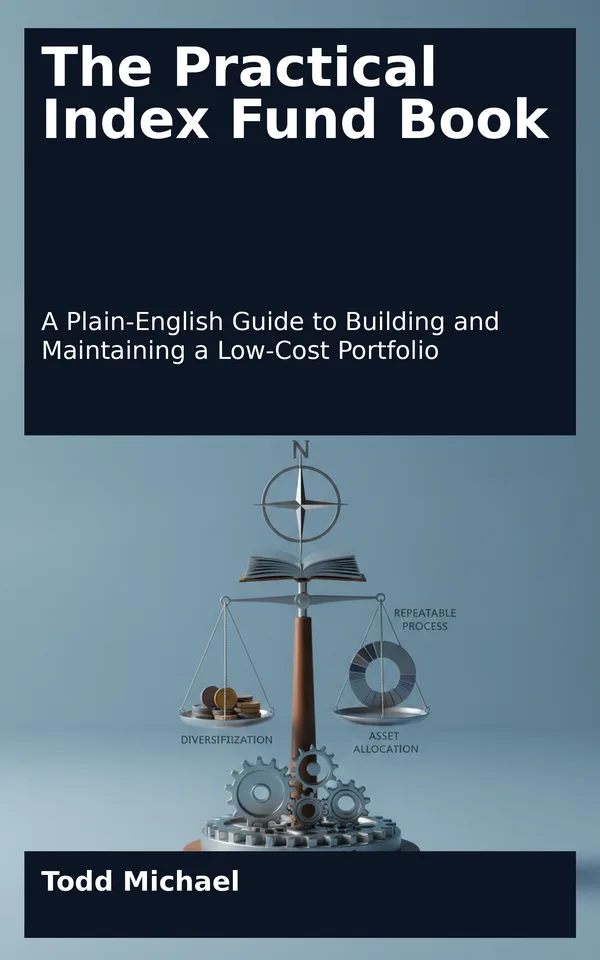
Cover of The Practical Index Fund Book

Money, Investing & Precious Metals

The Practical Index Fund Book

A Plain-English Guide to Building and Maintaining a Low-Cost Portfolio

by Todd Michael

Available now

Investing does not have to mean chasing hot stocks or watching the market every day. The Practical Index Fund Book explains how index funds work and offers a clear framework for building a portfolio around your goals, time horizon, and tolerance for risk.

Learn how to compare expense ratios and other costs, understand stocks and bonds, evaluate mutual funds and ETFs, and make sense of workplace plans, IRAs, and taxable accounts. Practical US-focused examples and checklists help you consider diversification, contributions, rebalancing, taxes, and the emotional challenges of staying invested when markets fall.

Whether you are choosing your first fund or simplifying an existing portfolio, this guide helps you ask better questions and create a maintenance routine you can follow. Investing involves risk, including the possible loss of principal. This book is educational and is not individualized financial or tax advice; consult a qualified professional about your circumstances.

Contents
  1. 1. A Plan Before a Fund
  2. Give Each Dollar a Job
  3. Understand Your Time Horizon
  4. Build a Buffer Before You Need One
  5. Put Debt in the Plan
  6. Risk Has Two Sides
  7. Decide What “Enough” Means for Now
  8. A Readiness Checklist
  9. Write a Short Starting Plan
  10. 2. How Index Funds Work
  11. 3. The Costs That Reduce Your Return
  12. 4. Mutual Funds and ETFs
  13. 5. Diversification Without Guesswork
  14. 6. Choosing an Asset Allocation
  15. 7. Simple Portfolio Designs
  16. 8. Choosing Where to Invest
  17. Start With the Job of the Money
  18. Workplace Retirement Plans
  19. Traditional and Roth IRAs
  20. Taxable Brokerage Accounts
  21. Comparing the Containers
  22. A Practical Sequence, Not a Universal Rule
  23. View Your Accounts as One Portfolio
  24. Before You Open or Fund an Account
  25. Keep the Decision Connected to the Plan
  26. 9. Taxes and Fund Placement
  27. Start With the Account
  28. Dividends: Income You May Not See as Cash
  29. Capital Gains: Two Ways They Can Reach You
  30. Why Index Funds Can Be Tax-Efficient
  31. Cost Basis: Keeping Score When You Sell
  32. Losses, Offsets, and the Wash-Sale Trap
  33. What Asset Location Means
  34. A Placement Example
  35. When the Neat Arrangement Does Not Fit
  36. Watch the Whole Portfolio
  37. Questions to Ask Before Moving or Selling
  38. Records and Professional Help
  39. 10. Evaluating and Buying a Fund
  40. Start With the Job, Not the Ticker

Read a sample: Give Each Dollar a Job

“Investing for the future” is a reasonable starting point, but it is too broad to guide many decisions. The future contains rent payments, career changes, family needs, retirement, and surprises. Each goal can have a different timeline and a different tolerance for loss.

Begin by writing down what you want the money to accomplish. Use ordinary language:

- Build financial flexibility for retirement. - Pay for education or training. - Make a down payment on a home. - Replace a car. - Cover future medical or family expenses. - Create options for a career change.

Some goals will be specific. Others will be more like intentions. You may not know exactly when you will retire or what a future home will cost. That is fine. A useful estimate is better than treating every dollar as though it has the same purpose.

For each goal, write down four things:

1. The purpose: What is the money for? 2. The approximate amount: How much might you need, in today’s dollars? 3. The timing: When might you begin using it? 4. The flexibility: What could you change if the money is worth less than expected?

The last question is easy to overlook. Two people may both expect to use money in five years, but one could postpone a home purchase while the other must make a payment on a fixed date. Their calendars look similar; their ability to absorb a loss may not.

Consider a hypothetical investor named Maya. She wants to build retirement savings and also hopes to buy a home within a few years. She could put both goals into one investment account and choose one portfolio. But doing so would hide an important difference: a market decline shortly before her home purchase could force her to delay the purchase, find money elsewhere, or sell investments at a loss. Her retirement savings may remain invested much longer.

Maya’s goals do not necessarily require two separate financial institutions or a complicated system. They do require separate decisions. She can track the money in different accounts, subaccounts, or a written plan. The important point is to avoid assuming that a single portfolio automatically suits every purpose.

More in The Practical Money Series

Cover of The Practical Dividend BookThe Practical Dividend BookAvailable nowCover of The Practical Retirement BookThe Practical Retirement BookAvailable now

More Money, Investing & Precious Metals

Cover of The Practical Gold BookThe Practical Gold BookAvailable nowCover of The Practical Gold Book, Volume 2The Practical Gold Book, Volume 2Available nowCover of The Practical Silver BookThe Practical Silver BookAvailable nowCover of The Practical Crypto BookThe Practical Crypto BookAvailable nowCover of Shielding Your WealthShielding Your WealthAvailable nowCover of Personal Finance AdvancedPersonal Finance AdvancedAvailable now

About Todd Michael

Todd Michael is an American author and the founder of ToddMichael.tv. He writes practical, plain-English books on money, health, preparedness, technology, games, humor and more.

About the author Todd Michael · Todd Michael’s author site

Part of the ToddMichael.tv network.