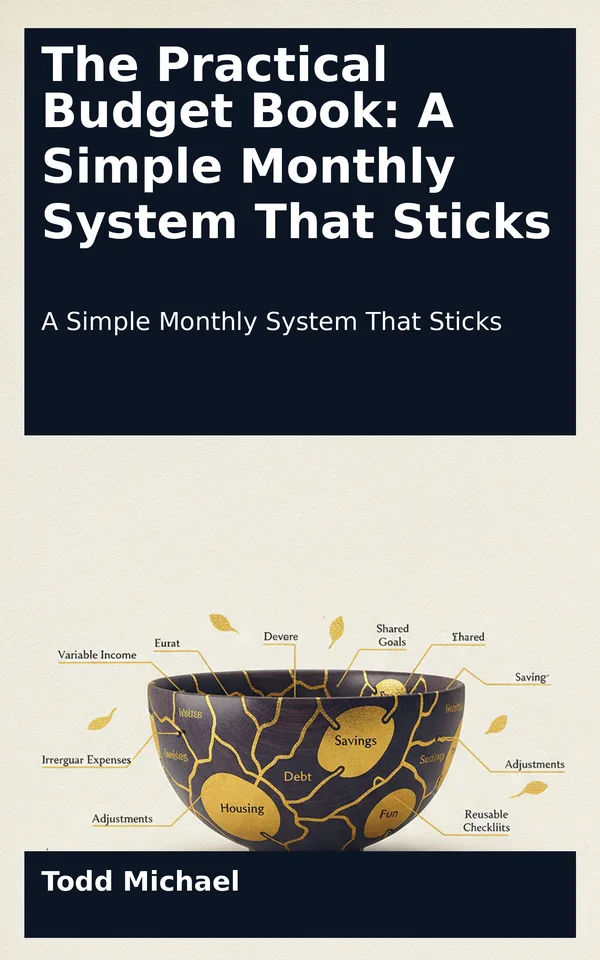
Read a sample: 1. A Budget That Can Change
On the first day of the month, a budget can look wonderfully orderly. Rent has its line. Groceries have theirs. There is money set aside for the electric bill, a debt payment and perhaps a little fun.
Then the month begins.
A prescription costs more than expected. A work shift is canceled. Someone brings home a birthday invitation that requires a gift and a long drive. None of these events means you have failed at budgeting. They mean your plan has met the conditions it was built for: ordinary life, with all its changes and imperfect information.
A useful budget is not a prediction you must get exactly right. It is a way to decide what your money needs to do, notice when circumstances change and make the next decision with clearer information. Some months will require small adjustments. Others may expose a gap that cannot be solved by rearranging a few categories. Either way, knowing what is happening gives you a better starting point than guessing.
This book offers a monthly system you can repeat and revise. You do not need a special personality, a perfect memory or a love of spreadsheets. You need a workable picture of the money coming in, the expenses competing for it and the timing of both.
A budget is a plan for using money over a period of time. In this book, that period is usually one month, because many household bills and decisions follow a monthly rhythm. A month is also short enough to review without having to reconstruct an entire year from memory.
Your plan might say that you expect to receive $3,400 in take-home pay and spend $450 on groceries. Those numbers have different levels of certainty. If your paycheck is steady, the income estimate may be dependable, though not guaranteed. The grocery amount is a target based on what you know before the shopping is done.
Suppose groceries cost $480 instead. The extra $30 is information. Perhaps food prices were higher than you expected, you hosted family, or you forgot that household supplies usually end up on the same receipt. You can look for an adjustment elsewhere in the month and use what you learned when planning the next one.
That is different from treating $450 as a rule whose violation proves you lack discipline. A number can be both useful and wrong. You chose it to guide a decision; now you have a reason to reconsider it.
Changing a budget does not mean every expense is affordable or every wish can be accommodated. Money assigned to one purpose is not simultaneously available for another. Flexibility means making those trade-offs visible, not pretending they do not exist.
The system in this book has four parts: plan, check, adjust and review. They are simple enough to remember, but each does a different job.
Start with the money you expect to have available and the expenses you know or reasonably expect. Give important obligations a place in the plan, along with everyday spending and any priorities you can afford to support.
Planning includes more than listing monthly totals. You also need to know when money will arrive and when it will be needed. A paycheck expected near the end of the month may cover a bill in the monthly total but arrive too late to pay it on time. A later chapter will help you map those dates.
At the beginning, estimates are acceptable. A practical estimate drawn from a recent bill or account statement is usually more useful than a perfect number you never find. Mark amounts you are unsure about so you know which ones to check.
A budget left untouched until the end of the month can explain what happened, but it offers fewer chances to guide what happens next.
A check-in can be brief. Look at your account balance, upcoming bills and a few categories where spending changes throughout the month. Compare what you have spent with what remains in the plan. You might do this once a week or after each payday. Choose a rhythm you can maintain.
The purpose is not to inspect every purchase for moral worth. It is to answer questions such as:
- Is a bill due before my next income arrives?
- Is the grocery amount I planned still realistic?
- Did an expense occur that I have not accounted for?
- Is money I expected actually available?
A check-in can reveal good news, too. A bill may be lower than expected, or a planned expense may not happen. That money can then be assigned deliberately rather than quietly disappearing into the rest of the month.
An adjustment moves the plan closer to reality. If transportation costs rise, you might reduce a restaurant allocation, postpone a purchase or use money you had reserved for a different flexible expense. If income arrives lower than expected, you may need to revise several categories and decide which obligations require immediate attention.
Make the change explicit. Write down the new amount or update it in your chosen tool. Otherwise, it is easy to move the same imagined $30 three different times.
Not every adjustment can happen within the budget alone. If essential expenses exceed available income, there may be no painless category to trim. You might need to explore a payment arrangement, seek additional income or assistance, or get qualified help. A budget makes the…