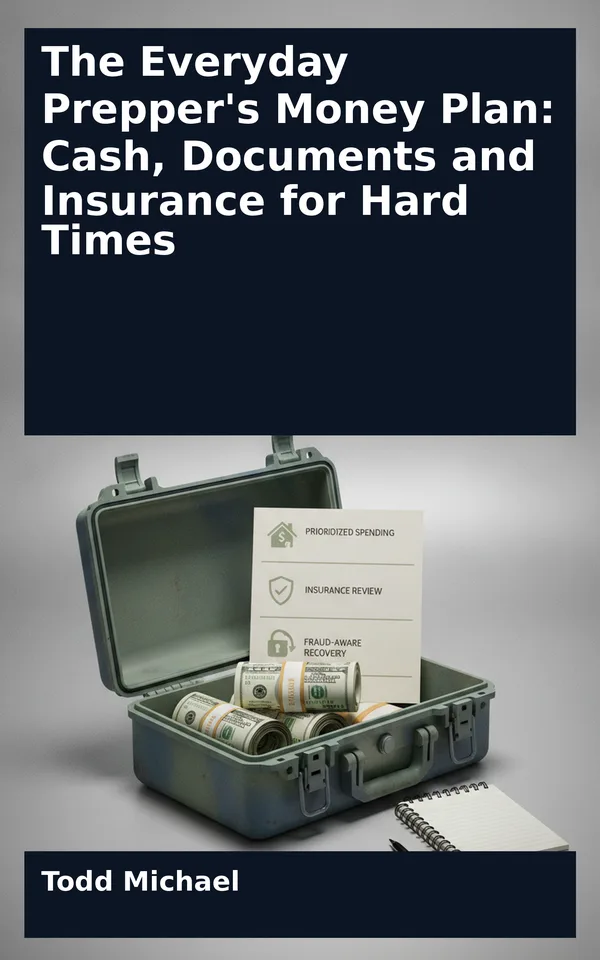
The Everyday Prepper's Money Plan: Cash, Documents and Insurance for Hard Times
by Todd Michael
Available nowWhen an emergency interrupts work, power or access to your accounts, a little financial preparation can make the next decision easier. This practical guide helps you build a money plan that fits your household and your budget—without fearmongering or promises of a quick fix.
Learn how to set aside and safeguard emergency cash, identify bills to prioritize, review insurance coverage and deductibles, and prepare for a temporary loss of income. You'll also organize the financial records needed to contact providers and support a claim, while keeping sensitive information protected. Clearly labeled hypothetical examples, checklists and simple worksheets turn each step into an achievable task.
Whether you rent or own, earn a regular paycheck or juggle variable income, you can start small and strengthen your plan over time. This U.S.-focused guide provides general information, not individualized financial, legal, medical or tax advice, and points you toward qualified help when needed.
Contents
- 1. Your Household's Financial Readiness Map
- Start With the Life You Actually Have
- Choose Disruptions Worth Planning Around
- Connect Physical Supplies to Financial Decisions
- Find the Pressure Points
- Your Household Readiness Worksheet
- See the Map in Use
- Choose a Starting Task That Fits
- Let the Map Guide the Rest of the Plan
- 2. The First 72 Hours: Paying When Systems Are Down
- 3. Where to Keep Emergency Money
- 4. Build a Starter Reserve on a Tight Budget
- Give the Reserve a Job
- Choose a First Target You Can Explain
- Find Room Without Pretending It Exists
- A Hypothetical Budget With Limited Room
- Let Contributions Change With Income
- Decide Where Each Dollar Belongs
- Make the Reserve Easy to Use—and Harder to Spend Accidentally
- Rebuild After You Use It
- Your Starter Reserve Worksheet
- 5. Know Your Essential Expenses
- 6. Plan for a Paycheck Interruption
- 7. Protect the Financial Records You Need
- 8. Make Your Accounts Accessible
- 9. Read Your Insurance Before You Need It
- 10. Match Coverage Questions to Your Household
- 11. Document Losses and Navigate a Claim
- 12. Find Help and Avoid Recovery Scams
- Start With the Need, Not the Offer
- Verify the Program Through a Separate Path
- Recognize the Pressure Points
- Choosing a Contractor Under Pressure
- Giving and Receiving Through Charities
- The Pause-and-Verify Checklist
- If You Have Already Responded
- Add One Page to Your Plan
- 13. Practice Your Money Plan
- Scenario One: The Outage
- Scenario Two: The Evacuation