Read a sample: 1. The Three Jobs for Your Next Dollar
You have paid the bills that cannot wait, made the required debt payments, and bought what your household needs for the month. There is some money left. Before you can enjoy that small margin, three sensible ideas compete for it.
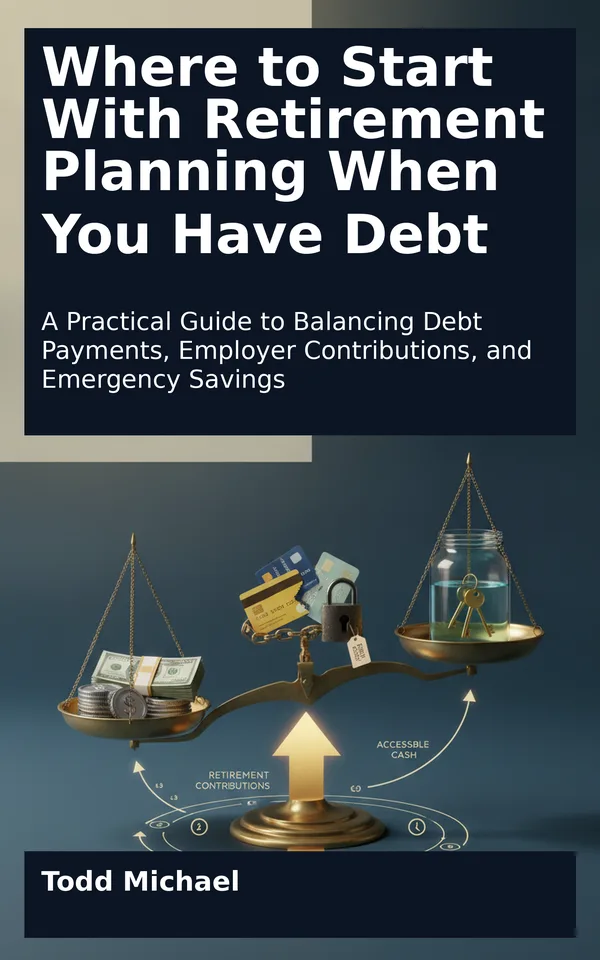
You could pay extra on a credit card and reduce the interest working against you. You could contribute to a retirement plan and give that money more time to grow. Or you could leave it somewhere accessible, so the next car repair does not send you back to the card.
Each choice has a purpose. Each has a cost. And when the amount available is limited, choosing one means giving up some benefit from another.
That tension can make retirement planning feel like a test with one correct answer. Should you become debt-free first? Should you contribute enough to receive an employer match? Should you save several months of expenses before doing anything else?
Those questions matter, but none can be answered well without knowing more about your situation. A high-interest balance, a generous workplace contribution, and an empty checking account create different pressures. So do an uncertain paycheck, an approaching promotional deadline, or a family member who depends on your income.
This book offers a way to compare those pressures without pretending they can all be reduced to one rule. Your first plan does not have to solve the rest of your financial life. It needs to give your available money useful work, protect the obligations you already have, and leave room to adjust as you learn more.
Before assigning money to a new goal, distinguish between what is available and what merely happens to be in your account today.
Rent or mortgage payments, utilities, food, transportation, insurance, required debt payments, and other necessary expenses come first in the cash-flow picture. So do predictable bills that arrive less often than monthly. Money sitting in checking today may already be needed for a car registration, an insurance premium, or a prescription refill.
The money discussed in this chapter is your directable surplus: what remains after you have accounted for current obligations and made a reasonable allowance for expenses that do not arrive on a neat monthly schedule. It is an estimate, not a permanent promise. A good estimate may be smaller than the balance you see on payday, and it may change from month to month.
If there is no surplus right now, that is useful information, not a personal failure. Trying to fund an ambitious retirement contribution while falling behind on necessities can create a more urgent problem. The next step may be to examine expenses, income, payment options, or sources of assistance before making an additional allocation. Chapter 2 will help you build that cash-flow snapshot.
Once you have an amount you can direct, the question becomes how best to assign it among three jobs.
An extra debt payment can do more than make a balance smaller. Depending on the debt and its terms, it may reduce future interest, shorten the time until payoff, free up income later, or lower the chance that an approaching deadline becomes a crisis.
Consider a hypothetical credit card balance of $2,000 with an annual percentage rate of 24%. A rough monthly interest estimate is 2% of the balance, or $40, assuming the balance and rate remain unchanged for that simple calculation. Actual card interest can differ because issuers commonly calculate it using daily balances and because payments and purchases change the balance.
If you pay an extra $100 toward that balance and do not borrow it back, the remaining balance is $100 lower. At the same assumed rate, that $100 would otherwise generate roughly $2 of interest over a month. The benefit continues beyond one month, although the exact savings depend on how the balance and payments change over time.
That estimate helps explain why high-cost debt often deserves attention. Paying it down can reduce a known contractual cost, though a variable rate or changing terms can alter the calculation. It can also improve monthly flexibility over time.
But rate is not the only feature that matters. A debt with a lower stated rate may have an approaching deadline, an overdue payment, or consequences for a missed installment that deserve immediate attention. Some promotional offers also have terms that are easy to misunderstand. Read the agreement before assuming that an advertised rate tells the whole story.
Required payments belong in your basic cash-flow plan. Extra payments are the part you compare with retirement contributions and additional cash savings. Chapters 3 and 4 will help you map what you owe and estimate the costs without treating every balance as equally urgent.
A retirement contribution gives money a different assignment. Instead of reducing what you owe today, it helps build resources for a time when you may have less employment income or choose to stop working.
Starting can matter even when the initial contribution is modest. Money invested for a longer period has more time to participate in potential growth, and a regular contribution can establish a habit you can increase later. Neither time nor habit guarantees an investment gain. Account values can rise or fall, fees can reduce results, and your eventual outcome depends on contributions, investments, costs, and market performance.
For some employees, the workplace plan adds another important consideration: an employer contribution tied to the employee’s contribution. The formula can make…