Everyday Guidebooks
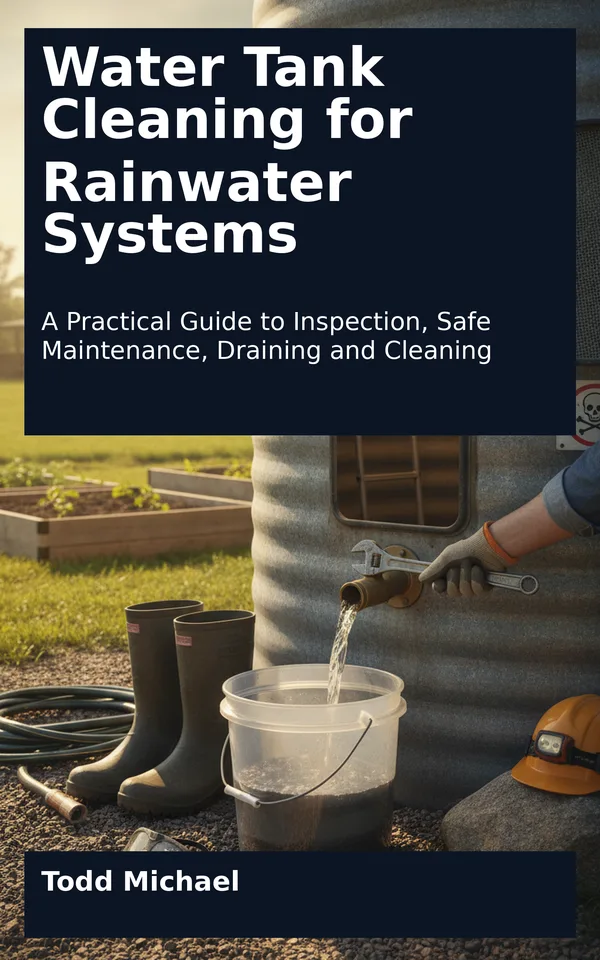
Cover of Water Tank Cleaning for Rainwater Systems

Preparedness & Self-Reliance

Water Tank Cleaning for Rainwater Systems

A Practical Guide to Inspection, Safe Maintenance, Draining and Cleaning

by Todd Michael

Available now

A rainwater tank can be an asset during a disruption—but only if you understand how to maintain it safely. If you have searched for “water tank how to clean,” this guide will help you turn that question into a practical plan.

Learn to recognize sediment, debris, damaged screens, and other signs that your system needs attention. Follow a step-by-step approach to preparing for maintenance, draining water responsibly, cleaning surfaces you can reach from outside the tank, and checking inlets and screens before returning the system to service. You'll also find inspection checklists, maintenance records, and guidance for deciding when a qualified professional is needed.

Safety comes first: the book explains the serious hazards of entering a tank and why rainwater should never be assumed safe to drink. Designed for beginners, it makes routine care easier to understand without promising that cleaning alone makes stored water potable.

Contents
  1. 1. Know Your Rainwater System
  2. Follow the Water
  3. The Catchment: Where Collection Begins
  4. Gutters, Downpipes, and the Collection Route
  5. Screens and First-Flush Devices
  6. Getting to Know the Tank
  7. Find the Openings and Fittings
  8. Pumps, Valves, and Connected Equipment
  9. Decide What the Water Is For
  10. Draw a Useful System Map
  11. 2. When Does a Tank Need Cleaning?
  12. 3. Safety Boundaries Before You Begin
  13. 4. Make a Maintenance Plan
  14. 5. Protect the System and Drain Responsibly
  15. 6. Inspect What You Can See
  16. 7. Remove Loose Debris and Sediment
  17. 8. Clean Accessible Tank Surfaces
  18. 9. Check Screens, Inlets, and Openings
  19. 10. Inspect the Collection Path
  20. 11. Return the System to Service
  21. 12. Rainwater Quality and Drinking-Water Limits
  22. 13. Troubleshooting and Professional Help
  23. 14. Build a Repeatable Maintenance Routine
  24. Other Books by Todd Michael

Read a sample: Follow the Water

Start at the catchment surface, the area that receives the rain. On many properties this is a house roof, barn roof, shed, or other building surface. From there, water usually moves through gutters and downpipes toward the tank. Depending on the installation, it may pass through screens, a leaf catcher, a first-flush device, or other equipment before entering storage.

After the tank, an outlet carries water toward a tap, pump, irrigation line, treatment equipment, or household plumbing. A separate overflow allows excess water to leave when the tank fills. Vents and access openings serve different purposes and should not be mistaken for ordinary outlets.

A simple route might look like this:

Roof → gutter → downpipe → leaf screen → tank inlet → tank → outlet → garden tap

Another property may have several roof sections feeding one tank, multiple tanks connected together, or a pump supplying water to several locations. Some pipes may be buried or concealed. Your map can include those unknown sections; it does not have to be a complete plumbing diagram.

Walk the visible route in daylight, keeping both feet on stable ground. Look rather than dismantle. If you cannot see a component without climbing, reaching over an edge, or opening a tank, mark it as something to investigate later from a safer position or with professional assistance.

As you follow the route, notice where leaves collect, where pipes change direction, and where water might escape. These observations will help you understand the difference between a dirty tank and debris entering from somewhere upstream. Cleaning storage surfaces will not, by itself, keep a blocked gutter or damaged inlet screen from sending more material into the system.

More Preparedness & Self-Reliance

Cover of The Everyday Prepper's Underground RefugeThe Everyday Prepper's Underground RefugeAvailable nowCover of The Expiration-Date ResetThe Expiration-Date ResetAvailable nowCover of A Place Above the WaterlineA Place Above the WaterlineAvailable nowCover of Food Storage Guidelines for Restaurants During DisruptionsFood Storage Guidelines for Restaurants During DisruptionsAvailable nowCover of Survival WaterSurvival WaterAvailable nowCover of Prepper Supplies for Accessible EvacuationPrepper Supplies for Accessible EvacuationAvailable now

About Todd Michael

Todd Michael is an American author and the founder of ToddMichael.tv. He writes practical, plain-English books on money, health, preparedness, technology, games, humor and more.

About the author Todd Michael · Todd Michael’s author site

Part of the ToddMichael.tv network.





