Read a sample: 1. Start With the Place, Not the House
The tiny house is often the first thing you picture: a sunny loft, a compact kitchen, a porch just big enough for two chairs. It is natural to begin there. The home is tangible, and imagining it can make a long-held goal feel possible.
But before choosing siding or putting down a deposit, consider a less photogenic question: Where, exactly, will you live in it?
A home that seems right on a showroom floor or in an online listing may not fit the rules or physical conditions of the place you have in mind. A wooded parcel might lack an approved way to handle wastewater. A relative’s backyard might have room for a small structure but not qualify for another dwelling. A tiny home on wheels might be welcome for a visit while full-time occupancy is treated differently.
None of these possibilities means your plan cannot work. It means the house, the property, and your intended use need to be investigated together. Starting with the place gives you a chance to adjust the plan while your choices are still flexible—and before a purchase narrows them for you.
This chapter helps you describe what you want, map the decisions in front of you, and identify the assumptions worth checking first. You do not need to master zoning or building codes today. You need a clear starting point and a reliable way to find the local answers that matter.
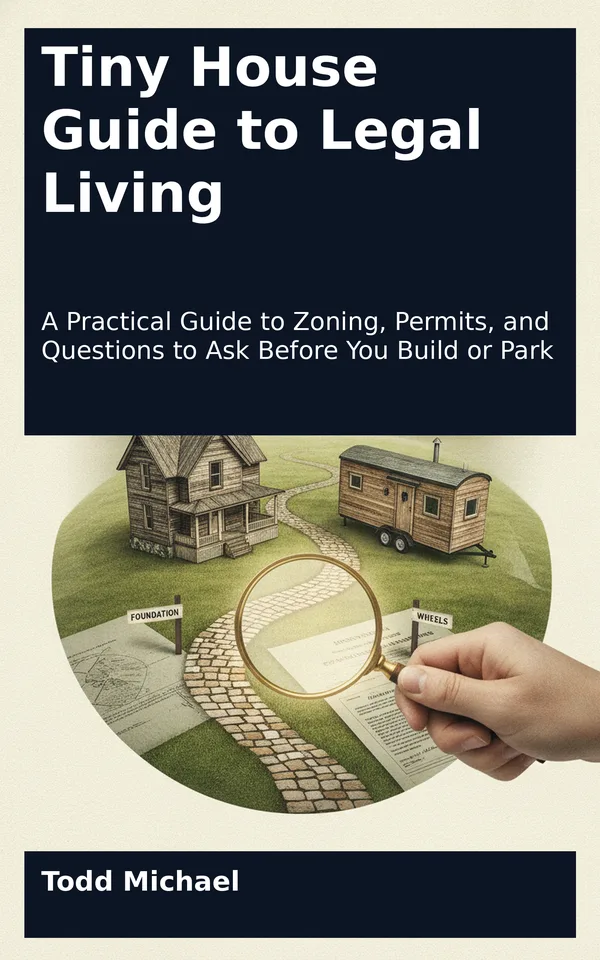
Think of your tiny-house plan as three connected pieces: the home, the land, and the occupancy.
The home is the physical structure you propose to live in. Is it built on a permanent foundation or on a trailer? Is it an existing unit, a new build, or a conversion? What are its approximate dimensions, and what facilities will it contain? These details can affect how officials classify it and what construction standards they apply.
The land is the specific place where you want the home to sit. It might be a vacant parcel, a backyard, a rented space in a park, or property shared with family. Its location determines which public agencies and local rules may apply. Its physical characteristics—access, slope, water, wastewater options, and available utilities—matter too.
The occupancy is how you intend to use the home. Will it be your primary residence, a seasonal retreat, a guest space, or a place to stay while another home is built? Who will live there, and for how long? A location that accommodates short visits does not necessarily accommodate an ongoing residence, and a structure approved for storage is not automatically approved for sleeping.
The pieces overlap. Changing one can change the questions you need to ask about the others. A foundation home may follow one approval path, while a home on wheels at the same address may face different questions. A backyard plan may depend not only on the tiny home itself but also on the existing house and the property’s eligibility for an additional residence.
The goal is not to find a tiny house that is “legal everywhere.” That is too broad to guide a purchase. The useful question is narrower: Can this proposed home be placed on this property and occupied in this way, subject to the approvals that apply?
Rules affecting tiny homes can come from more than one source. A city or county may regulate land use and development. A building department may review construction and inspections. A health agency may be involved in water or wastewater matters. A utility may have its own connection requirements. Depending on the property, private agreements or community rules may also affect what you can do.
The boundaries are not always obvious from a mailing address or a real estate listing. A property with a familiar city name in its address may be outside city limits. Two parcels close together may fall under different local governments or zoning districts. Even within the same district, an existing home, an easement, or a site constraint can change the practical answer.
That is why broad claims deserve a pause. “Tiny houses are allowed in this county” may be a useful lead, but it does not establish that your particular home can be occupied on a particular parcel. “The seller said it was buildable” is worth recording, but you still need to learn what kind of building and use the statement refers to.
Later chapters will help you identify the relevant authorities, locate their rules, and turn an address or parcel number into specific questions. For now, remember that a precise location makes your research more useful. If you do not yet have one, choose a search area and treat your early findings as preliminary rather than parcel-specific.
Before calling an office or shopping for a home, write a short description of your goal. Plain language is enough. You can refine the details as you learn more.
Start with the life you want, not a product description. You might want a modest primary residence near your work, a small accessible home on land you own, or a way to live close to family while maintaining some independence. These goals can lead to different choices about location, ownership, design, and timing.
Consider the following questions:
- Who will live in the home? Include anyone who may need to share the space regularly, as well as practical needs such as accessibility, privacy, pets, or room to work. - How…