Money, Investing & Precious Metals
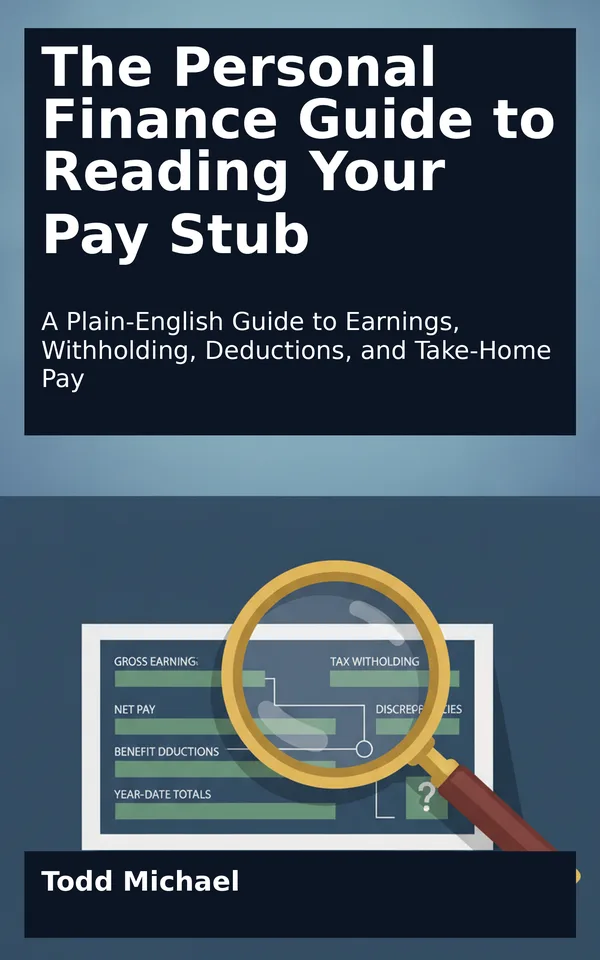
The Personal Finance Guide to Reading Your Pay Stub
A Plain-English Guide to Earnings, Withholding, Deductions, and Take-Home Pay
by Todd Michael
Available nowYour paycheck arrives, but where did the rest of your earnings go? Whether you are starting a job, comparing benefits, or trying to understand why your take-home pay changed, this guide helps you make sense of the numbers without an accounting degree.
Follow realistic pay stub examples to trace gross earnings through tax withholding and benefit deductions to net pay. Learn how regular hours, overtime, bonuses, insurance premiums, retirement contributions, and year-to-date totals may appear on a typical U.S. pay statement. Simple calculations and review checklists show you how to spot possible discrepancies, prepare useful records, and ask your payroll department informed questions.
Unlike general personal finance guide books, this focused resource starts with the document you receive every payday. You will build a repeatable routine for checking your pay and understanding changes as your work and benefits evolve.
Contents
- 1. Meet Your Pay Stub
- The Paycheck at a Glance
- Start With the Identifying Details
- A Hypothetical Paycheck
- The Earnings Section: What You Were Paid For
- The Tax Section: Money Withheld Along the Way
- The Deductions Section: Benefits and Other Amounts
- Net Pay and the Payment Details
- Current Amounts and Year-to-Date Totals
- Why Your Statement May Look Different
- Protect the Information on Your Pay Stub
- Your First Pay-Stub Review
- 2. Pay Periods, Pay Dates, and Your Records
- 3. Reading Hours, Rates, and Regular Earnings
- 4. Overtime, Bonuses, Tips, and Other Earnings
- Start With the Earnings Code
- Overtime: Check the Hours and the Structure
- Bonuses: Find the Period and the Terms
- Commissions: Follow the Sale Through the Plan
- Tips: Recorded Earnings Versus Cash Paid Again
- Other Earnings Worth Recognizing
- A Practical Check Before You Contact Payroll
- 5. From Gross Pay to Taxable Wages
- 6. Federal Income Tax Withholding
- 7. Social Security, Medicare, and Other Payroll Taxes
- 8. Insurance and Other Benefit Deductions
- 9. Retirement and Account Contributions
- 10. Other Deductions and Adjustments
- Start With the Effect on Your Pay
- Wage Garnishments and Other Required Withholding
- Loan Repayments and Pay Advances
- Purchases, Fees, and Other Voluntary Deductions
- Reimbursements: Money Coming Back to You
- Corrections, Reversals, and Retroactive Pay
- Build a Documentation Trail
- When the Explanation Does Not Settle the Question
- 11. Year-to-Date Totals and the Annual Picture
- 12. Why Your Take-Home Pay Changed
- 13. Checking for Discrepancies
- 14. Talking to Payroll and Staying Informed