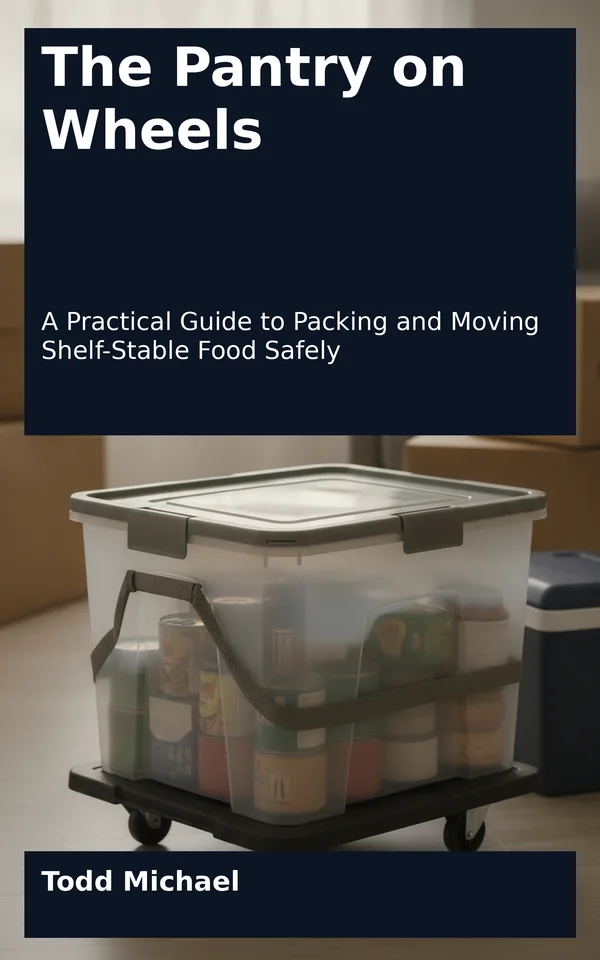
Read a sample: 1. A Pantry Built to Move
A pantry can look reassuring when everything is on a shelf. Cans stand in rows, bags of rice fit neatly beside boxes of pasta, and the ingredients for several familiar meals are within reach. Then a move appears on the calendar, or an evacuation notice makes leaving a possibility, and the same shelves present a different question: How much of this food can you actually take?
A portable pantry is not a second pantry purchased for an emergency. It is a practical way to make the shelf-stable food you already own easier to choose, pack, carry, transport, and put back to use. Its foundation is simple: sound food, manageable lidded containers, clear labels, and a plan that fits the people and vehicle available.
The goal is not to move every last packet. A useful plan protects your time and energy as well as your groceries. Sometimes a jar is worth wrapping and carrying because your household uses it regularly. Sometimes the sensible choice is to use it before moving, offer it to someone else, or replace it after you arrive.
You do not need to make every decision today. Start by understanding what belongs in a portable pantry and what you expect it to do for you.
Shelf-stable food is food that can ordinarily be stored unopened without refrigeration, according to its packaging. Canned beans, dry pasta, unopened nut butter, and many boxed foods are familiar examples. Once opened, some of these foods require refrigeration or other special handling, so the label still matters.
Portable means more than putting those foods in a container. A portable pantry has several useful qualities:
- It can be handled. Each packed container is light enough for the person who will move it, over the actual route it must travel.
- It contains its contents. Vulnerable packages and liquids have appropriate protection against spills or damage.
- It can be identified. You can tell what is inside without opening every lid.
- It can be transported without becoming a hazard. Containers can be positioned and secured without blocking the driver’s view or interfering with safe vehicle operation.
- It can be put back to work. The food that arrives is recognizable, suitable to keep, and reasonably easy to unpack.
Notice what is missing from that list: a requirement to own matching bins or build a large reserve. A few suitable containers may be enough for a small household. A larger household might need more, but the number should follow from the food worth moving, the available space, and the people who can handle the load.
A lidded bin is a useful outer container, not a magic shield. It may keep packages together and make stacking easier, but an ordinary lid does not necessarily prevent leaks, keep out pests, or protect food from extreme heat and cold. Those limits shape the way you pack. Bottles may need their own secondary containment; delicate bags may need protection from punctures; and every container still needs a reasonable place in the vehicle.
Before touching the shelves, picture the other end of the trip. Will you move directly into a home with a kitchen? Stay with relatives for a few days? Use temporary lodging with limited storage and no reliable way to cook? In an evacuation, the destination may not be certain at all.
These circumstances change which foods are useful. Dry beans may be a good choice for a planned move into a functioning kitchen, but less practical for a departure when you do not know whether you will have a stove, a pot, or enough water. Canned soup may travel well, but it is more useful if you have a way to open the can and somewhere to heat it—or if it is a product your household can eat without heating, as directed on its label.
Think about the people who will use the food, too. A caregiver may need to keep familiar foods easy to find. A household member with dietary restrictions may depend on products that are inconvenient to replace. Someone with limited lifting capacity may benefit more from several small containers than from one large bin that looks efficient until it needs to be carried upstairs.
Ask yourself:
- What foods does my household actually eat?
- Which items would be difficult or costly for us to replace promptly?
- What can we prepare with the facilities and tools we expect to have?
- How much room can food reasonably occupy after luggage, medication, mobility aids, and other essentials are accounted for?
- Who will lift each container, and along what route?
Your answers can be provisional. The point is to make choices that fit your circumstances rather than treating every pantry item as equally important.
Food that is sound, useful, and reasonably easy to transport is a strong candidate for the portable pantry. An unopened package of a staple your family eats each week is an obvious example. So is a specialty food needed for a household member’s diet, provided its package is intact and you can transport it under appropriate conditions.
Other foods deserve a closer look. A half-used bag of flour may be perfectly useful, but the existing bag may be easy to puncture. You can decide whether to secure it in suitable secondary containment, use it before moving, or leave it behind. A large glass jar may hold a favorite…