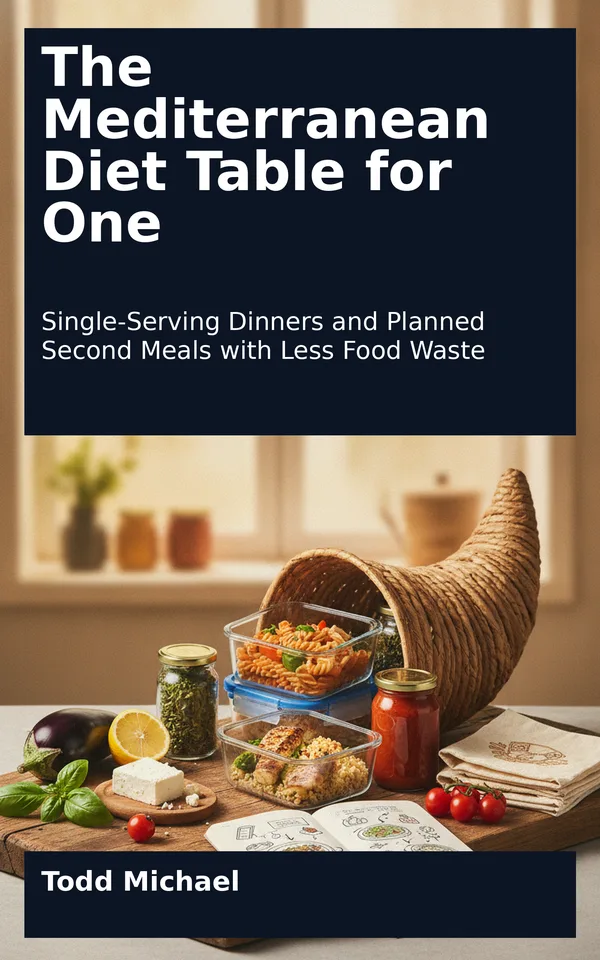
Read a sample: 1. A Mediterranean Table for One
Dinner for one can be as simple as warm chickpeas tossed with tomatoes, olive oil, and a squeeze of lemon. It can be a small pan of fish and vegetables, a bowl of herby grains, or eggs nestled into a gently simmering tomato sauce. None requires a special occasion or a table full of people. The pleasure is in making something that suits your appetite, your evening, and the ingredients you have.
Cooking for one does present its own puzzles. A bunch of parsley can look enormous beside a single plate. A can of beans rarely empties itself into one meal. Recipes written for a family may leave you eating the same dish until the novelty wears off. This book approaches those puzzles with two useful formats: dinners made for one and dinners designed to become a clearly identified second meal.
The aim is not to keep a perfectly stocked kitchen or use every last leaf at any cost. It is to make a good dinner, buy with a little more intention, and give useful ingredients a reasonable chance of becoming something delicious.
Mediterranean cooking draws from many places, traditions, and home kitchens. There is no single Mediterranean menu, and a week of dinners need not resemble one particular cuisine to take inspiration from the region. In this book, Mediterranean-style describes a flexible approach built around vegetables, legumes, grains, herbs, fruit, olive oil, and a variety of other satisfying ingredients.
Beans might share a skillet with greens and garlic. A modest piece of fish might sit beside roasted vegetables. A little feta can bring salty richness to a grain bowl, while yogurt, lemon, and herbs make a quick sauce. Poultry, eggs, cheese, and seafood all have a place, as do pasta and bread. Some dinners are entirely plant-based; others use animal ingredients as a central part of the plate.
Flavor does much of the work. Olive oil carries the aroma of garlic and spices. Lemon or vinegar adds brightness. Tomatoes can supply sweetness and acidity, while olives, capers, and cheese bring savory depth. Fresh herbs make a simple meal feel lively, but dried herbs are useful, too.
Think of these ideas as an invitation rather than a set of rules. Use the vegetables that look good, the beans you enjoy, and the grains that fit your schedule. If dinner needs an extra slice of bread or another spoonful of yogurt to feel complete, add it. A recipe can be a starting point and still be worth following.
Every dinner recipe in this book identifies its yield. That line is your first guide to what will happen after you cook.
A one-serving recipe is intended to make one dinner. You may still have ingredients left in their packages—a partial can of tomatoes, for example—but the finished dish is scaled for one person. If your appetite differs from the portion, adjust the meal to suit you. Add a side, save some food if there is more than you want, or increase an ingredient when the recipe allows.
A two-serving recipe makes a dinner and a planned second portion. The second serving is not an accidental surplus. The recipe tells you what it is, how to store it, and how to serve it again. Sometimes that means enjoying the same soup on another day. Sometimes it means turning a prepared base into a different meal, as in Chapter 12, where a batch of herbed lentils might first be served warm and later tucked into a pita.
Read the whole recipe before you begin, especially when it makes two servings. You may need to set aside part of a sauce before adding it to the first plate, keep a garnish separate, or cool and refrigerate the second portion. Those few details make the difference between a useful head start and a container of food you are unsure how to use.
A serving is a practical guide, not a judgment about how much you should eat. Your appetite may change from day to day, and a meal that satisfies one person may need bread, fruit, a salad, or a little more of the main dish for another. Make the table work for you.
Planned second meals work best when they are stored promptly and in a way that makes them easy to recognize. Once you have served dinner, transfer the portion you intend to save to a clean, shallow container. Refrigerate perishable cooked food within two hours of cooking, or within one hour if the surrounding temperature is above 90°F. Shallow containers help food cool more quickly; you do not need to leave a cooked dish on the counter until it reaches room temperature before refrigerating it.
Follow each recipe’s storage and reheating directions, and use clean utensils when handling food you plan to save. If you cannot remember how long a perishable food has been stored, or if it has been left out beyond the recommended time, discard it rather than relying on appearance or smell to judge whether it is safe.
Chapter 2 offers more guidance on storing cooked food and perishables, along with ways to handle opened cans and packages. For now, the important habit is simple: know which portion you are saving, put it away promptly, and give it a label if you are likely to forget what it is.
You do not need a kitchen full of specialized equipment to…