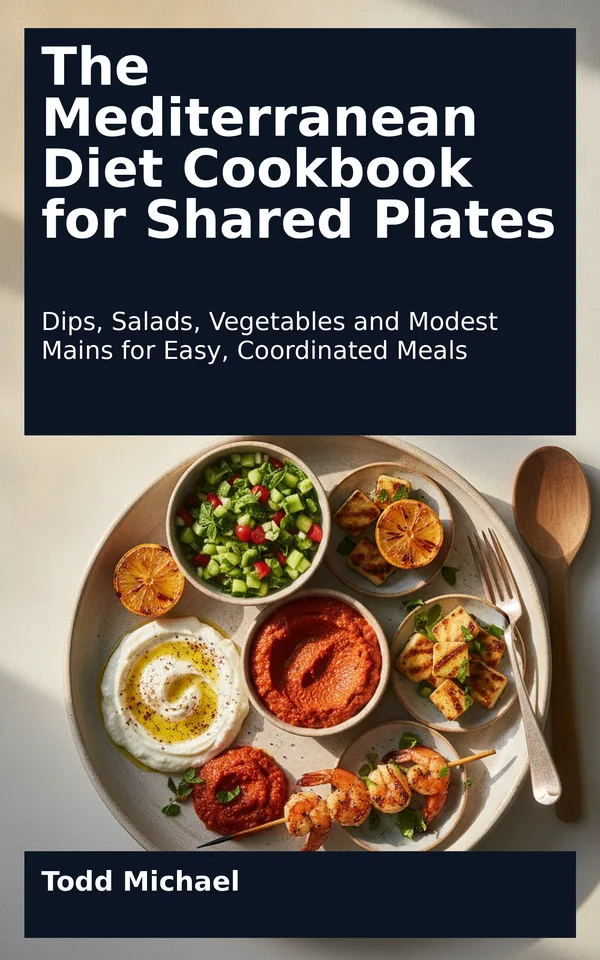
Read a sample: 1. The Shared Table
A shared meal can begin with something as simple as a bowl of white bean dip, a plate of sliced tomatoes, and warm bread passed from one end of the table to the other. Add a pan of roasted vegetables or a modest main, and the meal grows to suit the people gathered around it. Nothing needs to arrive under a silver cover. The pleasure is in having several inviting things to choose from and enough time to enjoy them together.
This book is built around that kind of table. Its Mediterranean-style dishes draw on familiar ingredients and techniques found across a wide and varied region: olive oil, legumes, vegetables, herbs, citrus, grains, seafood, yogurt, and simply prepared meats. The recipes are intended for home kitchens, not as a claim that every Mediterranean table looks alike. There are many food traditions around the Mediterranean, each shaped by its own places, histories, and cooks. Here, the emphasis is on generous flavor, useful flexibility, and the easy companionship of dishes served side by side.
A spread can be as small as two or three dishes. A salad and a pan of beans may be plenty for a quiet supper; a dip, two vegetable dishes, bread, and fish might suit a gathering. You do not need to make a dish from every chapter, and no category is mandatory. Think of the recipes as partners rather than obligations.
A shared table works because different dishes bring different pleasures. A cool, creamy dip can soften the bright edges of a lemony salad. Roasted carrots bring sweetness beside briny olives. A dish of lentils or a piece of fish gives the meal substance, while herbs, bread, and a spoonful of sauce help tie everything together.
Start by considering what you want the meal to feel like. For a light lunch, you might choose a crisp salad, cucumber yogurt, bread, and a dish of roasted vegetables. For dinner after a long day, a substantial grain or legume salad and a skillet of greens may be enough, perhaps with olives or cheese alongside. For guests, you might add a modest main and another vegetable dish, choosing recipes that can be prepared at different times.
The point is not to fill every inch of the table. It is to offer a little contrast and enough food for the occasion. Three dishes with distinct textures can feel more abundant than six that are all soft, rich, or heavily seasoned. Before adding another recipe, ask what it contributes. Does the spread need something crisp? Something warm? A little acidity, or a more substantial dish for guests who are hungry?
Bread, grains, beans, potatoes, and other filling foods can make a collection of vegetables and dips feel like dinner. They also give guests a way to make satisfying plates according to their appetites. Some people may take a little of everything; others may return to the lentils and bread. Both are welcome at the same table.
A good spread has variety, but variety does not mean making every dish from scratch or using a different ingredient in each one. Repeating an ingredient can make a meal feel connected. Lemon might brighten both a bean dip and a tray of roasted cauliflower, while parsley appears in a salad and as a final scattering over the vegetables. The dishes will still taste distinct if their textures and seasonings differ.
As you choose recipes, consider a few useful contrasts:
- Creamy and crisp. Pair a smooth dip with cucumbers, radishes, toasted bread, or a crunchy salad.
- Fresh and cooked. Set a bowl of chopped tomatoes beside roasted eggplant or warm, braised greens.
- Bright and mellow. Let lemon, vinegar, or herbs lift the deeper flavors of beans, grains, and roasted vegetables.
- Light and substantial. Balance leafy or chopped salads with bread, legumes, grains, cheese, fish, or another main.
- Warm and cool. A warm vegetable dish can sit comfortably beside a chilled dip or a salad dressed just before serving.
You need not satisfy every contrast at every meal. A table of warm dishes can be deeply comforting, and a cool spread can be exactly right on a hot day. These are simply ways to notice what might make the food more enjoyable together.
Seasoning matters across the whole table, too. If a dip is especially garlicky, a simply dressed salad may be a better companion than another strongly flavored sauce. If several dishes contain salty ingredients such as olives or cheese, taste the rest before adding more salt. Keep lemon wedges, olive oil, or fresh herbs available for anyone who wants a final adjustment.
The recipes in this book are grouped by the role they commonly play, but those roles are not fixed. A thick bean dip can become part of a substantial lunch when served with bread, sliced vegetables, and a salad. A grain salad can be a side dish at one meal and the center of the plate at another. Roasted vegetables can accompany fish, fill a piece of bread with yogurt sauce, or anchor a plant-centered supper.
Dips make an easy beginning because they can often be prepared in advance and served with whatever dippers are available. Offer a spoon with each bowl so guests can put some on their plates. Bread and crisp vegetables are natural companions, but a dip can also serve as a sauce for roasted…