Read a sample: 1. A Fresh Start for Your Sleep
Perhaps you remember a time when sleep seemed to take care of itself. You went to bed, drifted off, and woke up ready for the day. Now you may wake earlier than you intend, find yourself staring at the ceiling in the middle of the night, or wonder why a full night in bed did not leave you feeling refreshed.
Or perhaps sleep has never been especially easy, and recent changes in your schedule, health, or household have made it more noticeable. You may be working long hours, caring for someone, adjusting to retirement, or simply finding that the routines that once worked no longer fit.
Whatever brought you here, you do not need to start by blaming yourself. Sleep is affected by many parts of life, some within your control and others less so. A useful first step is not to chase a perfect night. It is to understand what your nights and days look like now, and then make small changes that support the rest you need.
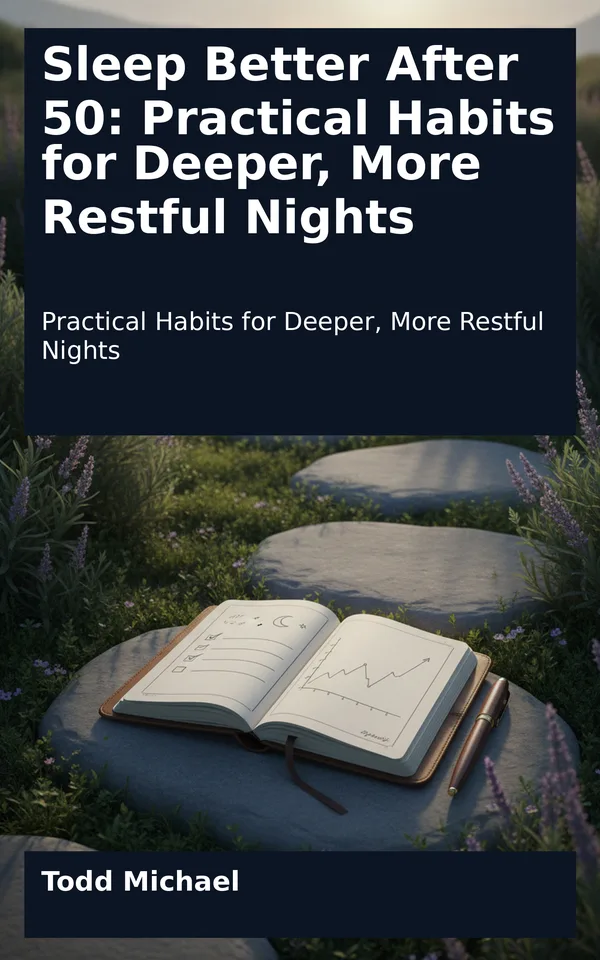
This chapter will help you begin. You will consider what sleep does for your everyday well-being, learn why it can change after 50, choose a realistic goal, and keep a simple one-week sleep log. The log is not a test. It is a way to replace guesswork with a clearer, kinder picture of your own experience.
A good night’s sleep can make the next day feel more manageable. You may find it easier to concentrate on a conversation, remember an appointment, or respond patiently when plans change. You may have more energy for a walk, a visit with a friend, or the ordinary work of caring for a home.
Sleep supports many processes throughout the body, including memory, immune function, and the regulation of mood and energy. It also gives the body time to carry out important maintenance. These benefits matter at every age.
But sleep is not an all-or-nothing achievement. One difficult night does not erase the benefits of your other habits, and one restful night does not solve every daytime challenge. It is normal for sleep to vary. A busy day, a change in routine, an uncomfortable room, or an unexpected worry can affect a night without signaling a lasting problem.
Think of sleep as one part of a larger picture. Food, movement, relationships, medical care, stress, and the demands on your time all matter too. You do not need to manage each part perfectly. You are looking for practical ways to give sleep a better opportunity to happen.
It also helps to remember that a full life includes evenings that do not follow a plan. A family celebration may run late. A neighbor may need help. A grandchild may spend the night. The aim of this book is not to make you choose between living your life and caring for your sleep. It is to help you build habits you can return to when ordinary life disrupts them.
Many adults notice that sleep feels different as they get older. You may become sleepy earlier in the evening and wake earlier in the morning. You may notice more awakenings, lighter sleep, or a greater sensitivity to noise. Some people begin napping more often; others find that naps make it harder to fall asleep at night.
These changes are common, but common does not mean universal. Your experience may differ from that of your spouse, your friends, or your younger self. Nor does it mean that every troublesome sleep change should be dismissed as “just getting older.”
Age can bring changes in the body’s sleep and wake rhythms. Other influences may arrive at the same time: pain or stiffness, menopause-related symptoms, urinary concerns, stress, grief, changes in activity, or a medical condition. Medicines and their timing can also affect sleep for some people. Retirement may remove the morning schedule that once organized the day, while caregiving may make uninterrupted sleep difficult to predict.
Often, several influences overlap. Suppose you wake earlier than you would like and begin spending more time in bed to make up for it. You may then notice more stretches of wakefulness and become frustrated. Or perhaps a painful shoulder wakes you, and once awake, you start thinking about tomorrow. It may be hard to tell where one influence ends and another begins.
You do not have to solve that puzzle immediately. The purpose of observing your sleep is to notice patterns worth exploring, not to diagnose yourself from a few entries in a notebook.
Troublesome symptoms deserve attention, whatever your age. If pain, frequent nighttime urination, hot flashes, breathing concerns, or another recurring issue is disturbing your sleep, consider discussing it with a healthcare professional. Do not stop or change prescribed medicine on your own in an effort to sleep better.
It is tempting to compare your sleep with someone else’s. A partner falls asleep as soon as the light goes out. A friend says she is full of energy after what sounds like a short night. Someone online insists that a particular bedtime is the secret to feeling young.
Those comparisons rarely tell the whole story. People differ in their schedules, health, responsibilities, sleep preferences, and how they judge their own rest. A person who looks energetic may be struggling in ways you cannot see. A routine that suits an early-rising walker may not fit someone whose caregiving duties extend into the night.
Adults generally…