Everyday Guidebooks
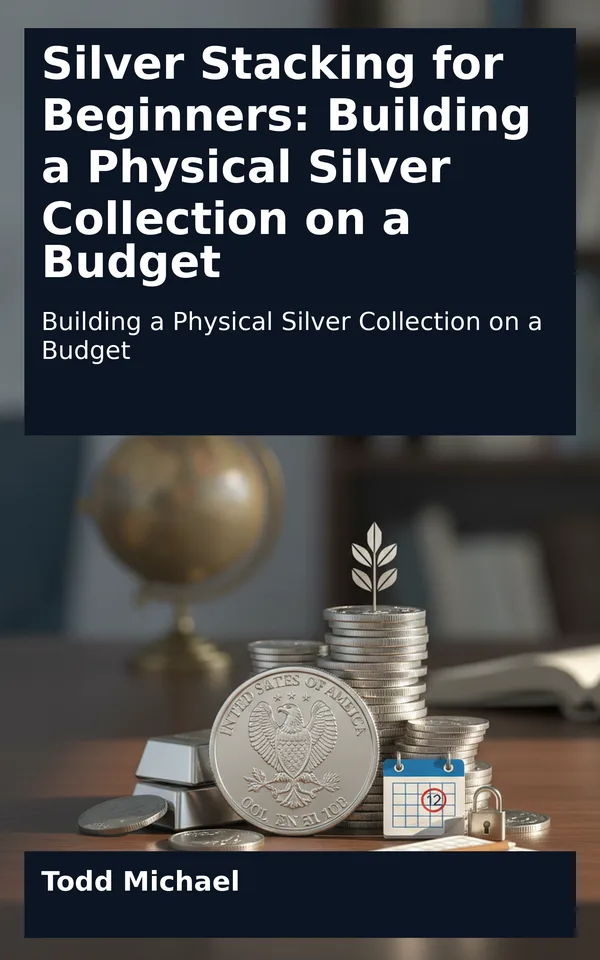
Cover of Silver Stacking for Beginners

Money, Investing & Precious Metals

Silver Stacking for Beginners: Building a Physical Silver Collection on a Budget

Building a Physical Silver Collection on a Budget

by Todd Michael

Available now

Want to start stacking silver without letting the hobby take over your budget? This practical guide helps you build a buying routine around money you can afford to set aside—and understand what you are paying for before you place an order.

Learn how bullion coins, rounds, and bars differ; compare premiums and total purchase costs; recognize common sales pressure and fraud warning signs; and keep straightforward records of what you buy. Worked examples and checklists help you weigh small purchases against shipping costs, consider basic home storage, and adjust your plan when life or silver prices change.

At the center of the book is a flexible 12-month stacking plan you can adapt, pause, or decide not to follow. Written for U.S. beginners, this educational guide makes no price predictions and does not offer personalized investment or tax advice. Check current rules and consult qualified professionals when appropriate.

Contents
  1. 1. What a Silver Stack Is—and Is Not
  2. 2. Make Room in the Budget
  3. 3. Understand Weight, Purity, and Spot Price
  4. 4. Choose Coins, Rounds, or Bars
  5. 5. Calculate the Real Cost
  6. Start With the Silver, Then Add the Costs
  7. What Can Change the Checkout Total?
  8. A Side-by-Side Order Comparison
  9. Batching: Lower Fixed Costs, More Waiting
  10. When a Minimum Changes the Decision
  11. Compare More Than the Price per Ounce
  12. A Practical Cost Worksheet
  13. A Final Check Before You Pay
  14. 6. Find a Seller and Place a First Order
  15. 7. Avoid Common Buying Traps
  16. 8. Build Your 12-Month Stacking Plan
  17. 9. Adapt the Plan When Life Changes
  18. 10. Keep a Useful Stack Record
  19. Start with the Questions Your Record Should Answer
  20. Choose a Format You Will Maintain
  21. Record What You Bought, Not Just What You Intended to Buy
  22. Calculate Silver Content Carefully
  23. Capture the Cost You Actually Paid
  24. A Worked Example: Two Purchases, One Clear Record
  25. Save the Evidence Behind the Numbers
  26. Keep the History When Something Changes
  27. Use the Record for Insurance and Future Sales
  28. Understand the Tax Connection Without Guessing
  29. A Reproducible Inventory Template
  30. A Short Recordkeeping Routine
  31. 11. Protect a Small Stack at Home
  32. Start With Discretion
  33. Choose a Place Before Choosing a Container
  34. Ordinary Containers: Useful Organization, Limited Protection
  35. Lockboxes and Safes: More Protection, More Questions
  36. Moisture, Handling, and Appearance
  37. Plan for the People in Your Household
  38. Keep Records Useful but Separate
  39. Understand What Insurance May—and May Not—Cover
  40. Weigh Home Storage Against Other Options
Read a sample: 1. What a Silver Stack Is—and Is Not

A silver stack can begin with one small purchase: a silver round from a reputable dealer, a coin chosen for its bullion content, or a modest bar bought after you have compared the total cost. It does not need a display case, a dramatic story, or a prediction about what the economy will do next.

The word stack can make the activity sound more elaborate than it is. In this book, stacking means deliberately acquiring and keeping physical silver over time, usually with attention to the amount of silver you own and what you paid for it. Some people buy monthly. Others save for several months before making a purchase. Some decide that owning physical silver does not fit their circumstances and never start.

All of those choices can be reasonable. The purpose of this book is not to persuade you that you need silver. It is to help you understand the purchase well enough to make your own decision, then build a manageable routine if you decide to proceed.

Physical silver has qualities that appeal to many buyers. You can hold it, store it, and choose among familiar forms such as coins, rounds, and bars. It also has limitations that are easy to overlook when the object in your hand feels more concrete than a number on a screen. Its market price moves. Buying and selling involve costs. Storage requires thought. When you want to turn silver back into dollars, the offer you receive may be less than you expect.

Before choosing your first piece, it helps to understand what you would actually be buying—and what you would not.

Imagine that a buyer named Lena has reviewed her finances and decided she can set aside a modest amount for an optional silver purchase. She compares a few common bullion products, checks their prices and fees, buys from a seller she has researched, and keeps the receipt. Several months later, she repeats the process if the money is still available and the purchase still makes sense to her.

That is stacking: a series of deliberate decisions, not a requirement to buy on a particular schedule.

The physical pieces Lena accumulates are her stack. The individual items may differ in appearance, but her main interest is the silver they contain. She may prefer one design or size over another, yet she does not need every date, mint, or variation to consider her stack worthwhile.

A stack is also personal. One person may prefer a few recognizable coins. Another may choose plain rounds or bars because the price is more appealing at the time. A third may stop after one purchase because keeping physical metal turns out to be less convenient than expected.

The size of the stack does not determine whether the process is sensible. What matters more is whether the purchases fit the buyer’s budget, purpose, and willingness to accept the risks.

You will encounter the word bullion throughout this book. Bullion is precious metal valued primarily for its metal content rather than for rarity or artistic significance. Bullion products come in several forms.

A bullion coin is issued by a government and generally has a stated face value. That face value is not necessarily what the silver is worth, what you will pay for the coin, or what a buyer will offer you later.

A round is a coin-shaped piece of metal that is generally produced by a private mint. It may have an attractive design and information about its silver content, but it is not the same thing as a government-issued coin.

A bar is a piece of bullion made in a bar or ingot form. Bars come in different sizes, and their markings and designs vary by producer.

These categories are a starting point, not a guarantee of quality, authenticity, or resale value. Two products containing the same stated amount of silver can sell for different prices. Their makers, sizes, availability, condition, and buyer demand can all affect the transaction.

Later chapters will help you compare these forms without requiring you to become an expert in every product. For now, the important distinction is that a stacker usually begins by asking, “How much silver am I buying, and what is my total cost?” rather than, “How rare is this particular piece?”

Silver stacking and coin collecting can overlap. A stacker may enjoy attractive designs, and a collector may appreciate the metal content of a coin. The difference is primarily one of purpose.

A collector focused on rarity may care deeply about a coin’s date, mint, condition, historical significance, or grading. A small difference in condition or a particular variety can matter a great deal to that buyer. Learning to evaluate those details takes time, and a purchase made for collectible appeal may depend on finding another buyer who values the same features.

A stacker focused on bullion generally gives more weight to silver content, total cost, recognizability, and the practical question of how the item might be sold. The design can still be enjoyable, but enjoyment does not automatically make the additional price recoverable.

Suppose, in a hypothetical example, that two pieces each contain one troy ounce of silver. One costs $38 in total, and the other costs $48 in total because the buyer likes its special design. The second piece costs $10 more, even though the stated silver content is the same. If the buyer values…

More in Practical Metals

Cover of Selling Gold and SilverSelling Gold and SilverAvailable nowCover of Gold and Silver Bullion CoinsGold and Silver Bullion CoinsAvailable nowCover of Junk Silver ExplainedJunk Silver ExplainedAvailable nowCover of Storing and Protecting Precious MetalsStoring and Protecting Precious MetalsAvailable now

More Money, Investing & Precious Metals

Cover of The Practical Gold BookThe Practical Gold BookAvailable nowCover of The Practical Gold Book, Volume 2The Practical Gold Book, Volume 2Available nowCover of The Practical Silver BookThe Practical Silver BookAvailable nowCover of The Practical Crypto BookThe Practical Crypto BookAvailable nowCover of Shielding Your WealthShielding Your WealthAvailable nowCover of Personal Finance AdvancedPersonal Finance AdvancedAvailable now

About Todd Michael

Todd Michael is an American author and the founder of ToddMichael.tv. He writes practical, plain-English books on money, health, preparedness, technology, games, humor and more.

About the author Todd Michael · Todd Michael’s author site

Part of the ToddMichael.tv network.