Read a sample: 1. What an Emergency Fund Must Do
The car will not start on the morning you are supposed to drive to work. The repair shop can take it today, but it needs a deposit before ordering the part. At the same time, rent is due soon, and your next paycheck has not arrived.
This is the moment an emergency fund is meant to handle. Its purpose is not simply to make a household look financially prepared on paper. It is to give the household workable choices when an expense or interruption demands action.
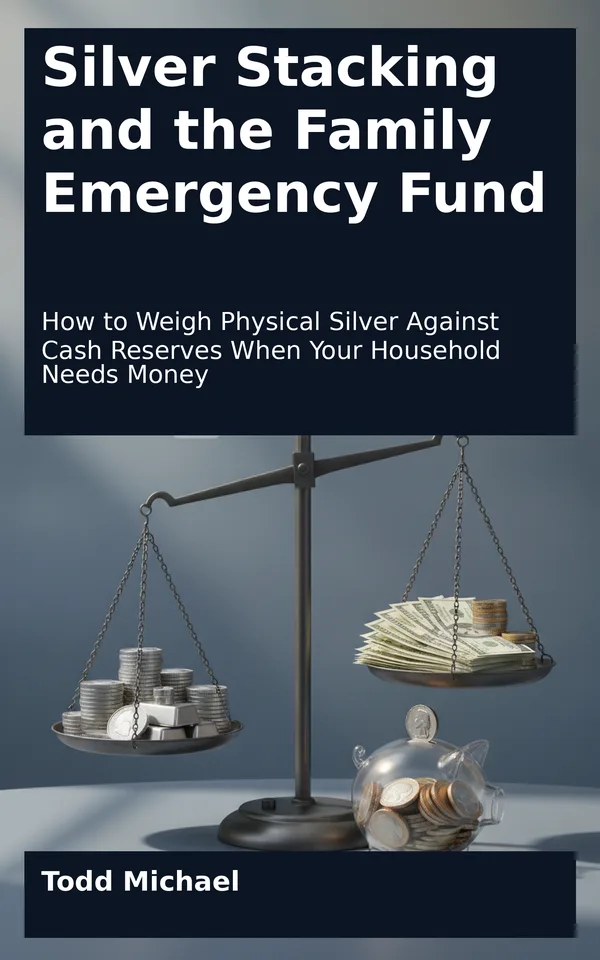
For someone interested in silver stacking, that raises a useful question: if you own physical silver, how much of your emergency preparation does it represent? The answer depends on more than the market value of the metal or the amount you paid for it. It also depends on what the household needs to pay, when payment is due, and how the money can reach the person or business asking for it.
This book does not begin with a prescribed percentage to hold in silver. It begins with the job your reserve must perform. Once that job is clear, you can weigh physical silver alongside cash and make a decision that reflects your household rather than a generic rule.
An everyday financial emergency is an unexpected event that requires money or reduces income before the household has had a reasonable chance to adjust. It may be dramatic, but it does not have to be. A broken refrigerator, an urgent trip to help a relative, an insurance deductible, or a missed paycheck can all put pressure on a budget.
Not every unwelcome expense is an emergency. A seasonal utility bill may be larger than usual, but if it arrives every year, it is also something a household can anticipate. Replacing aging tires may be inconvenient, yet their eventual replacement is foreseeable. Planned expenses can still become urgent when there is not enough money set aside for them; the distinction is useful because it suggests a different preparation strategy. Regular saving for predictable costs can protect an emergency fund for events that are harder to schedule.
Nor does an expense have to be truly unforeseeable to matter. You may know that a car will eventually need repairs without knowing which part will fail or when. You may expect occasional gaps in work without knowing how long the next one will last. A practical reserve responds to that uncertainty rather than requiring a perfect definition.
The essential questions are:
- Does the expense protect health, housing, income, transportation, or another important household need?
- Does payment need to happen before ordinary income or planned savings can cover it?
- What would happen if the household delayed, borrowed, or went without?
The answers are not identical for every family. A vehicle repair may be urgent for someone who drives to work and less urgent for someone with reliable public transportation. A short-notice hotel stay may be necessary for a family displaced from its home but optional in another situation. An emergency fund should reflect those differences.
For this book, an immediately usable reserve means money the household can reasonably expect to access and use in the form required when a bill comes due. That might include a balance available in checking, savings that can be transferred in time, or some physical currency for a merchant that accepts it. None is perfectly available in every circumstance: accounts can be temporarily inaccessible, transfers can take time, and cash can be lost or refused for a particular transaction.
Physical silver is different. It is a saleable asset, not generally a direct payment method for ordinary household bills. Converting it into usable money involves finding a buyer, agreeing on a price, completing the transaction, and receiving proceeds; the timing, costs, and amount received are uncertain. Other investments can present their own access and value risks as well.
That distinction does not make silver a poor choice for every household or make a bank balance sufficient in every emergency. It separates two useful questions: What can we pay with now? and What else might we turn into money if we need to? Both answers belong in a household plan, but they should not be treated as interchangeable.
A reserve has to work on the timeline of the expense. “We own enough” is less helpful than “We can pay the amount required by the deadline.”
Consider a hypothetical household facing a $900 car repair. The shop requires $300 today to order parts and the remaining $600 when the work is finished. The household has $500 available in checking and expects its next paycheck before the balance is due. If that paycheck arrives as expected and other bills leave enough room, the household may be able to proceed. If rent or another essential payment also needs that $500, the apparent cushion is smaller than it first looks.
Now imagine the same household owns silver it believes could be sold for more than the repair cost. That information may help with a later decision, but it does not settle the deposit question. The relevant test is whether the household can get the required payment to the shop today without neglecting another obligation.
Deadlines can also create a chain of decisions. A missed paycheck may not cause a crisis on the first day if the checking balance covers groceries and transportation. The strain may appear later, when rent,…