Read a sample: 1. A Seasonal Mediterranean Supper Kitchen
A good supper does not have to begin with a perfect market basket. It can start with a can of chickpeas, a handful of greens, and the last lemon in the bowl. Add a warm grain, a little olive oil, and perhaps a spoonful of yogurt, and the odds and ends become a meal.
That kind of flexibility is at the heart of this book. Mediterranean-style cooking is not a single formula or the property of one kitchen. The countries around the Mediterranean have distinct ingredients, traditions, and ways of eating. The suppers that follow draw on a broad collection of familiar elements—vegetables, legumes, grains, olive oil, herbs, fish, and poultry—while leaving room for the produce and practical choices available to you.
Think of the vegetables as the beginning of the plate rather than an afterthought. Some nights they might be roasted until browned and sweet, then tossed with lentils. On others, they might soften into a tomato sauce around pieces of fish or bring crunch and color to a bowl of grains. Fish, poultry, beans, and grains make these meals satisfying, but they need not crowd out the produce that gives each supper its character.
There is no requirement to cook an elaborate spread. One generous skillet, a pot of soup, or a pan of vegetables with a well-chosen accompaniment can be enough. A sauce or side from later in the book is an invitation, not an obligation.
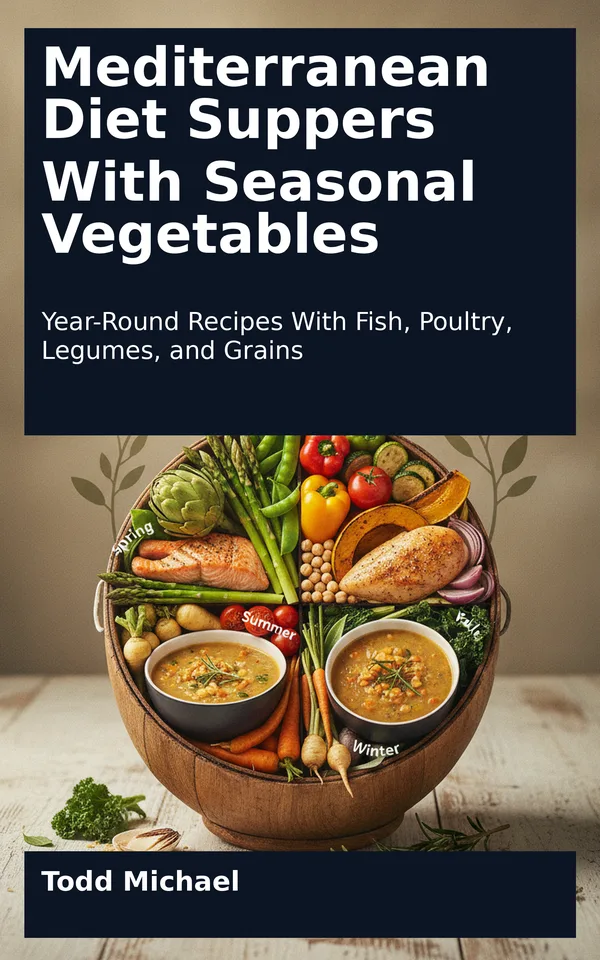
The chapters are arranged by season because produce often tastes especially good when it is plentiful and suited to the weather. Tender greens and peas can make a spring supper feel fresh; tomatoes and peppers bring their own richness to summer cooking. Squash, mushrooms, and sturdy greens offer substance as temperatures cool, while cabbage, roots, citrus, and pantry staples can carry a winter meal.
Seasons, however, do not turn on the same day everywhere. Asparagus may appear early in one region and much later in another. A mild climate might offer leafy greens through winter, while a colder one depends on stored roots and frozen vegetables. Local growing practices, transportation, and the length of a market season also affect what you see.
Use the seasonal chapters as a guide, not a calendar you must obey. If beautiful cauliflower appears while the book suggests spring peas, cook the cauliflower in a way that suits it, or choose a recipe built around a firmer vegetable. If tomatoes are expensive or lack flavor, a good canned tomato may serve the dish better. Frozen peas, green beans, spinach, and artichoke hearts can be useful ingredients in their own right, especially when fresh choices are limited.
Freshness is only one consideration. Think about flavor, price, convenience, and how a vegetable will behave in the pan. A bag of frozen spinach can make a weeknight supper possible; a head of cabbage can provide several meals without demanding immediate attention. Both deserve a place in a seasonal kitchen.
When planning dinner, choose a vegetable or two first, then decide what will make them a meal. A grain can provide a base, beans or lentils can add substance, and a modest portion of fish or poultry can turn vegetables into a shared main dish. Many recipes combine more than one of these elements, but the balance is flexible.
A few combinations are especially useful to keep in mind:
- Greens and beans: Soften garlic in olive oil, add cooked beans, and fold in greens until tender. Serve with bread or a cooked grain, with lemon at the table.
- Roasted vegetables and lentils: Roast vegetables cut into similar-size pieces, then toss them with cooked lentils and a sharp dressing. Add herbs or yogurt if you have them.
- Fish and a vegetable skillet: Cook vegetables until nearly tender, add fish, and finish gently with a lid on the pan. Bread or a quick-cooking grain can catch the juices.
- Poultry and a tray of vegetables: Roast poultry and vegetables with enough space for the heat to circulate. Choose cuts and vegetables with compatible cooking times, or add them to the pan in stages.
- Grain bowls: Start with warm or room-temperature grains, add cooked or raw vegetables and a protein, then finish with a dressing, herbs, or something tangy.
These are ideas rather than strict recipes. They help answer the familiar question of what to do with a vegetable once it is home. The recipes in the chapters ahead offer more specific combinations and instructions; these patterns make it easier to improvise between them.
A useful pantry is not a shopping list to complete all at once. Begin with foods you already enjoy, then add a few ingredients as recipes call for them. The aim is to make a satisfying supper easier, not to fill every shelf.
Olive oil is a natural starting point. Use it for cooking vegetables, dressing grains, and finishing soups or beans. Choose an oil whose flavor you like and store it away from heat and direct light. Lemons and other citrus bring brightness, while wine vinegar or another vinegar you enjoy can provide acidity when citrus is not on hand.
Keep a few legumes within reach. Canned chickpeas, white beans, and lentils are convenient on busy evenings. Dried beans and lentils offer variety and are useful when you have time to cook a pot. Canned tomatoes, tomato paste, and good broth or stock can…