Read a sample: 1. A Week of Good Food for One
Cooking for one can be a pleasure. You get to choose what sounds good, season it the way you like, and sit down to a meal made for you. It can also feel like an elaborate production for a single plate. A recipe serves four, a bunch of herbs is already wilting, and by the time dinner is ready, the thought of washing another pan has lost its charm.
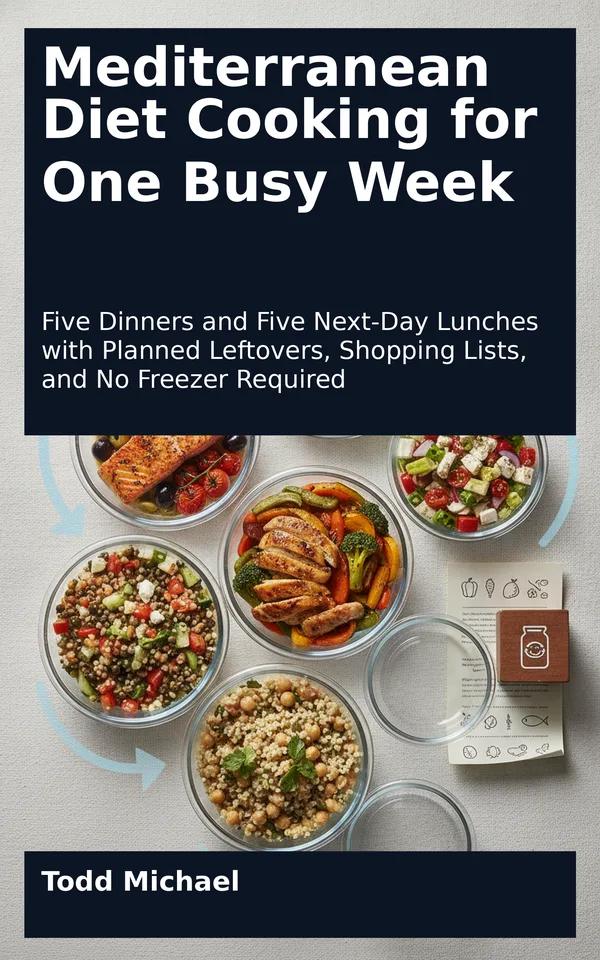
This book offers a different rhythm: five dinners that each do a little work for the following day’s lunch. The meals are Mediterranean-style, full of familiar ingredients such as vegetables, beans, olive oil, lemon, herbs, grains, and simply prepared proteins. They are designed for a busy person who wants good food without turning the entire week over to cooking.
The plan runs across six days, from Monday through Saturday. You cook dinner Monday through Friday. Each dinner supplies a component for the next day’s lunch, so the final lunch follows Friday’s dinner on Saturday. That gives you five dinners and five lunches—not five days of every meal, and not an expectation that you will eat the same dish twice.
You might roast chicken and vegetables one evening, then use some of them in a fresh white bean bowl the next day. Later in the week, herbed rice becomes the foundation of a cool, tangy salad. A turkey and zucchini tomato pan becomes a stuffed pepper. Each lunch has its own character, even though part of it began in the dinner pan.
The aim is not a perfect week. It is a useful one: a plan that helps you buy with purpose, cook a manageable amount, and enjoy food that feels worth sitting down for.
Many recipes solve the problem of cooking for a group. This one solves a different problem: how to make the effort of cooking feel worthwhile when there is one person at the table.
The answer is planned portions. Instead of making a large batch and wondering how long you can face the same meal, you prepare a little more of one or two ingredients because you already know where they are going. The dinner recipe identifies the amount to set aside, and its companion lunch recipe shows you how to use it.
That distinction matters. Ordinary leftovers are what happen when there is food left after everyone has eaten. They can be wonderful, but they can also be awkward: a few spoonfuls of beans, a lonely piece of chicken, or vegetables with no obvious destination. Planned portions have a destination before you begin. They are part of the recipe, not an afterthought.
This does not mean every dinner becomes two full servings of the same thing. Sometimes the shared element is a cooked protein and vegetables. Sometimes it is a portion of chickpeas or rice. Fresh ingredients, a different sauce, or a new way of serving the food make lunch feel separate from dinner.
For example, a tomato-chickpea skillet is warm, saucy, and served with toast. Its companion lunch takes reserved chickpeas in a different direction, adding crunchy vegetables and yogurt sauce for a pita filling. You benefit from work already done, but you are not simply reheating the skillet.
Each pair is written as a team. Before you start dinner, read both recipes so you know what the lunch needs. Reserve the specified portion before serving, refrigerate it as directed, and add the lunch’s fresh components when the paired recipe calls for them. Chapter 4 explains the kitchen and storage practices behind that handoff; the recipe chapters give the instructions for each meal.
The menu below is the route through the book. The chapter numbers let you move directly from each dinner to its companion lunch.
Monday dinner: Lemon-Herb Chicken and Vegetables
Tuesday lunch: Chicken and White Bean Bowl
Dinner begins with chicken and roasted vegetables seasoned with lemon and herbs. You will cook the amount needed for your plate and a measured portion for the next meal. At lunch, the reserved chicken and vegetables join white beans, greens, and a lemon dressing. The bowl is a different combination of textures and flavors, with beans making the ingredients go further.
Find the dinner in Chapter 5 and the lunch in Chapter 6.
Tuesday dinner: Tomato-Chickpea Skillet
Wednesday lunch: Crunchy Chickpea Pita
Chickpeas, tomatoes, greens, and herbs make a comforting skillet dinner, with whole-grain toast alongside. Some chickpeas are reserved for lunch, where crisp vegetables and a yogurt sauce turn them into a satisfying pita filling. If pita or yogurt is not a good fit for you, the lunch chapter offers alternatives.
Find the dinner in Chapter 7 and the lunch in Chapter 8.
Wednesday dinner: Fish with Herbed Rice and Green Beans
Thursday lunch: Herbed Rice and White Bean Salad
A simply cooked fish fillet shares the dinner plate with green beans and herbed rice. The fish is for dinner; the extra rice is for lunch. The next day, that rice becomes a cool salad with white beans, chopped vegetables, and a tangy dressing. The beans connect this meal to the beginning of the week and give an opened package a useful second destination.
Find the dinner in Chapter 9 and the lunch in Chapter 10. The dinner chapter also discusses a practical option for purchasing fish during the week.
Thursday dinner: Turkey and Zucchini Tomato Pan
Friday lunch: Turkey-Stuffed Pepper
Ground turkey and zucchini simmer…