Read a sample: 1. Start With One Morning
Picture a weekday morning when breakfast is already waiting. You open the refrigerator, warm a portion of baked oats, and add a spoonful of yogurt. Or you unwrap a breakfast burrito you prepared earlier and heat it while you gather your things. The cooking happened on a day when you had more time; the morning itself requires only a few simple steps.
That is the idea behind breakfast meal prep. You do some of the washing, chopping, cooking, and portioning ahead of time so that breakfast takes less effort when the day begins. You do not need to prepare every meal for the week, purchase a matching set of containers, or eat the same thing five days in a row. You only need a useful starting point.
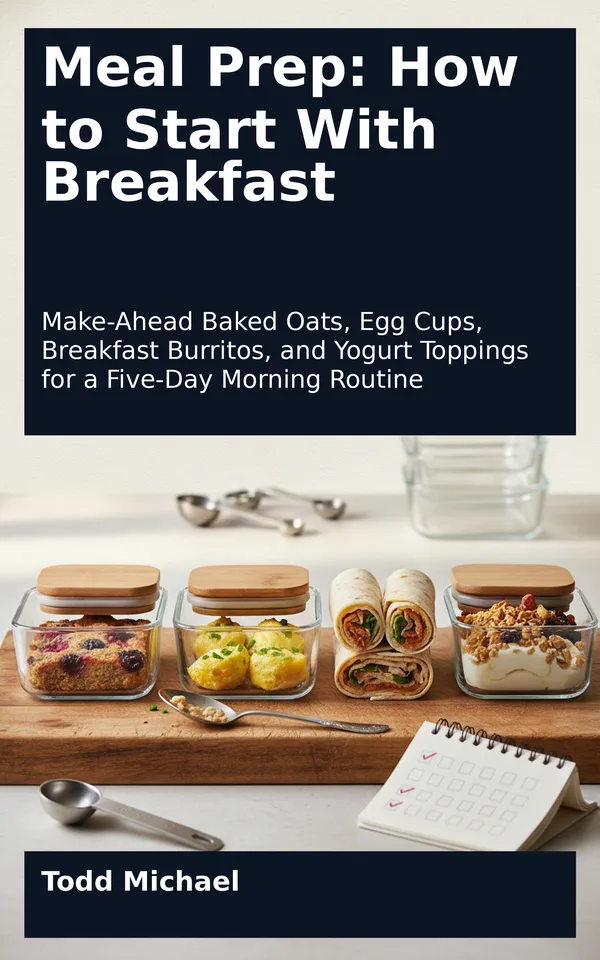
This book focuses on four kinds of breakfast: baked oats, egg cups, breakfast burritos, and yogurt toppings. Each offers a different way to put a little work in now and make a future morning easier. The recipes and the five-day plan will guide you through the details. For this first chapter, the goal is simpler: decide what would make breakfast easier in your household and choose a manageable first step.
Before choosing a recipe, think about your last few weekday mornings. You do not need a perfect schedule or a detailed record. A few honest observations will help you avoid preparing food that looks appealing in the refrigerator but never makes it onto the table.
Start with time. How many minutes do you usually have between deciding to eat and needing to leave or begin your next task? A bowl of yogurt with a prepared topping may suit a morning when you can pause briefly at the counter. A baked-oat portion may work when you have time to warm it and sit down. A burrito may be useful when you need something you can wrap and carry after heating.
Next, consider where you eat. If breakfast happens at home, a plate and fork may be no trouble. If you eat after arriving at work, think about how you will keep food cold during the trip and whether you have access to a microwave. If your morning involves getting children ready, a breakfast that can be served in individual portions may make the rush easier to manage.
Finally, think about appetite. Are you hungry as soon as you wake up, or does breakfast sound better an hour later? Do you prefer something sweet, something savory, or a little of both during the week? The answer matters more than what you think breakfast is supposed to look like. A prepared meal is useful only when you want to eat it.
You may notice that your mornings differ. Perhaps Monday and Wednesday are rushed, while Tuesday allows a few minutes at home. Make a quick note of those differences. They will help you decide which breakfasts need to be especially convenient and which can involve a little assembly.
Meal prep can mean cooking a complete dish and dividing it into portions. It can also mean preparing one helpful part of a meal. Both approaches belong in this book.
A pan of baked oats is an example of a prepared dish. Once it is baked, cooled, and divided according to the recipe, portions are ready to store for later breakfasts. Egg cups work in a similar way: you cook individual portions ahead, then store and reheat them as directed.
Breakfast burritos involve a few more parts. You prepare the fillings, assemble the burritos, and wrap them for storage. The reward is a complete, portable breakfast that can be reheated when needed. Yogurt toppings take another approach: you prepare a fruit topping or crunchy mixture ahead, then add it to yogurt when you are ready to eat. Keeping crunchy toppings separate until serving helps them retain their texture.
You can also prep without completing an entire recipe in one session. Washing fruit, measuring ingredients, or choosing containers can make cooking day smoother. If a full batch feels like too much for your first attempt, even setting aside ingredients and selecting a recipe is a worthwhile beginning.
The point is to move a task away from a busy morning. Whether that task is baking a pan of oats or simply preparing a topping depends on the breakfast and the time you have available.
The four breakfast types solve slightly different problems. Use this guide to narrow the options before you turn to the recipes.
Choose baked oats if you want a spoonable breakfast you can portion from one pan. Baked oats are a good introduction to batch cooking because one dish can provide several servings. Fruit, nuts, seeds, and spices offer different flavors and textures. They are especially convenient if you enjoy a breakfast you can warm and eat from a bowl or plate.
Choose egg cups if you prefer a savory breakfast in individual portions. Egg cups can include vegetables, cheese, beans, or cooked meat, depending on the recipe. They are useful when different people need different numbers of pieces or when you want a savory component to serve with fruit or toast.
Choose breakfast burritos if you want a wrapped, substantial option. Burritos bring fillings together in a tortilla and can be prepared for later reheating. They take some assembly, so allow time to cook the fillings and wrap each portion. They can be particularly helpful for…