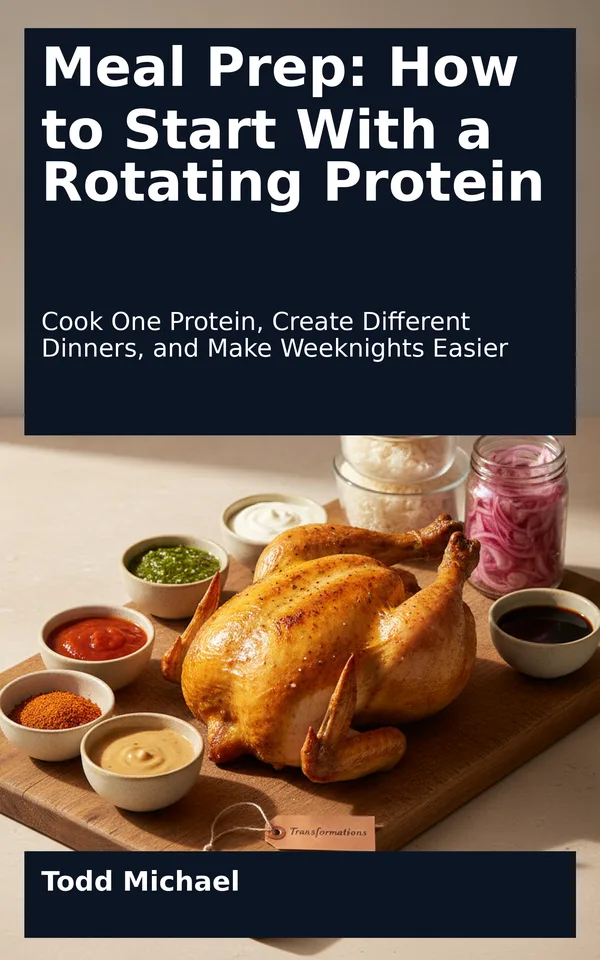
Read a sample: 1. Start With One Protein
At the end of a long day, dinner can feel like a string of decisions: What should we make? Is there anything in the refrigerator? How long will it take? Even when the ingredients are there, starting from the beginning every evening can demand more energy than you have left.
This book offers a simpler starting point. Prepare one protein ahead of time, then use it as the foundation for several different dinners. Add a side, some vegetables, and a sauce or seasoning that gives each meal its own character. The protein is familiar, but the finished dinners do not have to feel repetitive.
You might start the week with a batch of simply seasoned chicken. One evening, it becomes a warm grain bowl with vegetables and a lemony sauce. Another night, it goes into tortillas with crisp cabbage. Later, it might join pasta and a quick tomato sauce. The work of cooking the chicken is already done; what changes is the way you bring dinner together.
That is the rotating-protein system. It is not a demand to spend your entire weekend cooking, eat identical containers of food, or follow a rigid menu. It is a way to make one useful decision early, so the rest of the week asks a little less of you.
The system begins with a single protein: chicken, beef, pork, turkey, tofu, or beans. These are the six foundations explored in this book. Each has a dedicated week with a basic preparation and four dinners built around it.
Choose one protein for the week and prepare it in a form that can travel comfortably between meals. The chicken might be cooked and sliced. Ground turkey might be browned and crumbled. Tofu might be baked in pieces. Beans might be cooked from dried or prepared from cans. The method changes with the ingredient, but the idea stays the same: do the central cooking once, then give yourself options.
The word rotation works in two ways. Within a week, you rotate the supporting ingredients and flavors around the prepared protein. From one week to the next, you can rotate the protein itself. Chicken this week does not mean chicken forever. When you are ready for a change, move to tofu, beef, beans, or whichever plan suits your household.
You do not need to work through the six plans in order. Choose the one that sounds good, fits your schedule, or makes use of ingredients you already have. A rotation is useful because it provides structure; it is flexible because you remain in charge of the structure.
For many dinners, the protein is the component that asks for the most advance thought. It may need trimming, pressing, draining, cooking, or simply more attention than you want to give it on a busy evening. Preparing it ahead removes one substantial step from dinner time.
That does not mean every other part of the meal must also be made from scratch in advance. A bag of washed greens, a pot of rice, warmed tortillas, frozen vegetables, or a jarred sauce can all help finish a dinner. Some nights you may cook a fresh side because you enjoy it. Other nights you may assemble what you have and sit down to eat.
Starting with one protein also makes shopping more focused. Instead of buying ingredients for several unrelated main dishes, you choose a foundation and look for sides and flavors that work with it. You can still have variety, but the plan has a center.
There is another benefit: a simply prepared protein gives you room to respond to the day you actually have. If you planned a bowl but want something handheld, the chicken, beef, tofu, or beans can often move into a wrap. If you have a little more time than expected, you might cook vegetables and make a sauce. The prepared foundation gives you a head start without making every decision for you.
The most useful batch is one that can take on different flavors later. If all the chicken is coated in a strongly flavored sauce before it goes into storage, every dinner begins with that same sauce. If the batch is seasoned more simply, you can take it in several directions.
Simple does not have to mean bland. Salt, pepper, and a little oil may be enough for an initial preparation. Depending on the protein and your preferences, mild additions such as garlic or onion can also work. The goal is to build a savory base without committing the whole batch to one particular dinner.
Save more assertive flavors for the portion you are serving. Add a smoky seasoning when you warm meat for tacos, spoon a bright dressing over a bowl, or toss tofu with a sauce just before serving. In the bean plan, the same principle might mean preparing a pot of beans that can later become a filling, a soup component, or part of a grain bowl.
This approach is especially helpful when people at the table like different things. One person can add a spicy sauce while another chooses something mild. A strong flavor can be offered alongside the meal rather than mixed into the entire batch.
Of course, if your household loves one particular seasoning, use it. The point is not to avoid flavor. The point is to make the first round of flavor work with the dinners you intend to…