Read a sample: 1. The Separate-Until-Serving Method
A good make-ahead lunch should taste like the one you meant to make. The cucumber should still have a little snap, the rice should be tender rather than waterlogged, and the toasted seeds should announce themselves with a crunch. None of that requires an elaborate stack of matching containers. It requires a little attention to what happens when ingredients spend hours together.
The separate-until-serving method is simple: prepare the parts of a lunch, pack compatible ingredients together, and give the ingredients that need protection a space of their own. At lunchtime, combine them in the order that makes sense. You might pour a lemony dressing over a grain bowl, tuck cool greens into a pita, or scatter nuts over a warm base. That last minute of assembly is part of the recipe, not an extra chore.
Separation is not an all-or-nothing rule. Chickpeas and roasted carrots can often share a compartment. Shredded cabbage can sit beside noodles. A firm cheese can mingle with dry, crisp vegetables. The trick is recognizing which combinations improve as they sit and which lose the qualities you wanted in the first place.
Moisture is the main reason to think in components. Ingredients naturally release water, and that water moves toward drier foods. A juicy tomato can soften nearby crackers. A spoonful of yogurt sauce can dampen bread. Washed greens packed while wet can leave a puddle at the bottom of a container.
This does not mean wet ingredients are a problem. Their juices, acidity, and richness are part of what makes lunch enjoyable. They simply need to meet more absorbent ingredients at the right time. A tomato salad may be delicious after the tomatoes have mingled with vinegar and herbs, while those same seasoned tomatoes can make a wrap unpleasantly soft if rolled inside the bread the night before.
Heat also changes texture. Steam trapped in a sealed container condenses into droplets, which can soften crisp vegetables and toppings. Warm food placed beside chilled ingredients can also warm them. When you cook a component ahead, follow the cooling and refrigeration procedure in Chapter 2 before packing it with cold ingredients. Chapter 2 provides the specific time-and-temperature guidance for cooling, chilling, carrying, and reheating food.
Time makes these effects more noticeable. A few minutes of contact may barely change a lunch; a longer rest can turn a crisp edge soft. Some ingredients benefit from that rest. Beans can absorb flavor from a vinaigrette, and sturdy cabbage can mellow in a dressing. Others, such as tender herbs or toasted breadcrumbs, are most appealing when added just before eating.
Texture and safety are related but different decisions. A separate cup can keep a sauce from soaking into vegetables, but it does not replace refrigeration or an insulated bag with cold packs. Likewise, food is not necessarily safe just because it looks or smells fine. Use Chapter 2 for safe handling guidance; use the packing choices in this chapter to make the food enjoyable when you sit down to eat.
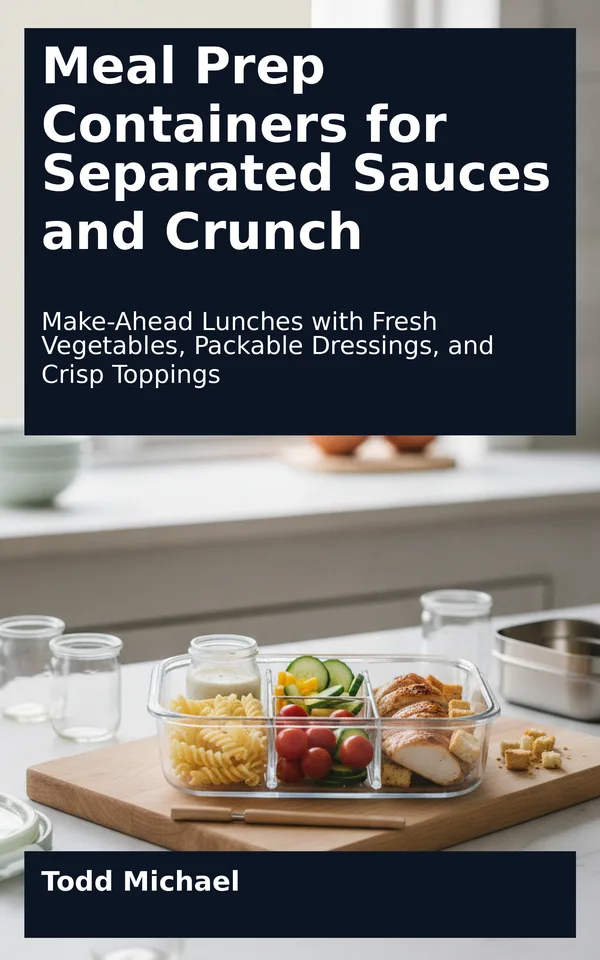
Throughout this book, think of a lunch as a small set of components rather than one finished mixture. The following key gives each component a job. You do not need a separate container for every item; you need enough separation to protect the ingredients that matter most.
Base: The main body of the meal. This might be rice, quinoa, noodles, beans, lentils, greens, cooked vegetables, or a combination. A base may be served cold or reheated, depending on the recipe.
Partner: An ingredient that can share space with the base without causing an unwanted change before serving. Cooled roasted vegetables might join cooked grains, for example, or drained beans might sit with chopped bell pepper. Proteins can often join a cold base when the recipe directs, provided all components are handled and stored as directed.
Sauce: A dressing, dip, spread, or other moist finishing ingredient. Pack it in a small leak-resistant cup or another securely closed container when adding it early would soften the rest of the meal. Some recipes deliberately dress a sturdy component ahead; in those cases, follow the recipe rather than separating for separation’s sake.
Fresh finish: An ingredient whose color, bite, or flavor is best preserved apart from the base. This group can include tender greens, herbs, juicy tomatoes, sliced cucumber, or avocado, depending on the meal. A fresh finish is not always dry, so it may need its own compartment rather than sharing one with crunchy toppings.
Crunch: A dry topping or side that should stay dry until serving. Toasted seeds, nuts, crisp noodles, crackers, and toasted breadcrumbs belong here. Pack them away from condensation and moist ingredients.
Bread: Wraps, pitas, flatbreads, and crackers when they serve as the vehicle for the meal. Bread usually benefits from being packed apart from juicy fillings and spreads. Crackers may fit the crunch category too; what matters is keeping them protected until you are ready to eat.
A single lunch may use only three categories. A lentil bowl with roasted vegetables, dressing, and toasted seeds has a base with a partner, a sauce, and a crunch. A pita lunch might use all six: a bean filling, chopped vegetables, sauce, herbs, seeds, and bread. Let the food determine the arrangement.
Start with the ingredient that takes up the most room. Ask what will happen if the other ingredients touch it for the planned storage period. If the answer…