Money, Investing & Precious Metals
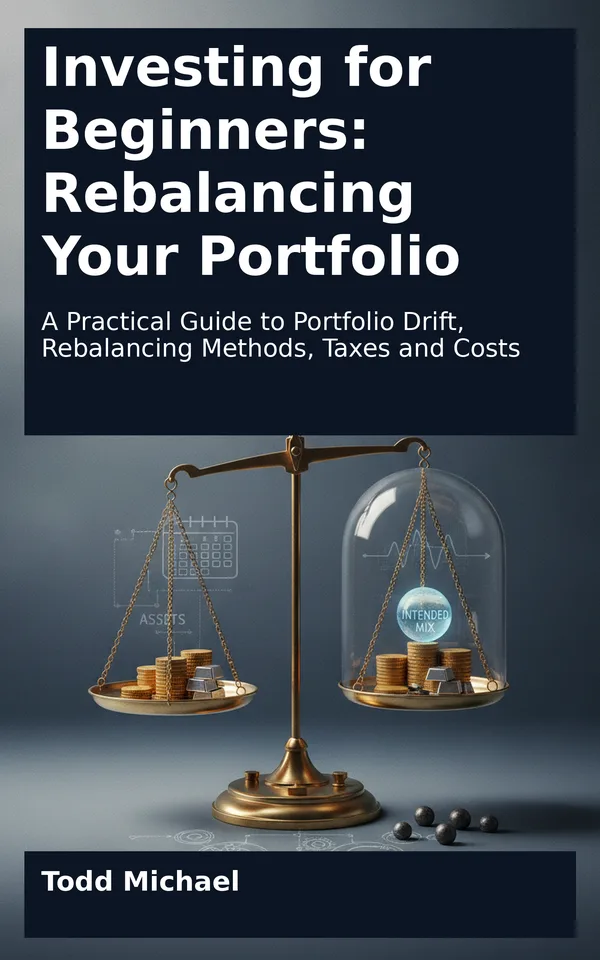
Investing for Beginners: Rebalancing Your Portfolio
A Practical Guide to Portfolio Drift, Rebalancing Methods, Taxes and Costs
by Todd Michael
Available nowYour investments can move out of balance even when you do nothing. As markets rise and fall, the mix you originally chose may gradually take on more—or less—risk than you intended.
If you have searched for how to understand investing for beginners, this guide gives you a practical next step: learning how to maintain a portfolio once you have one. You'll see how to calculate your current allocation, recognize drift and compare rebalancing on a calendar with acting when your allocation crosses a threshold.
Clear, worked examples explore using new contributions or selling investments, with attention to transaction costs and potential taxes in taxable and retirement accounts. You'll also learn how to review investments held in more than one account and create a written maintenance routine.
Rebalancing cannot eliminate risk or guarantee better returns. It can, however, help you make more deliberate decisions about the portfolio you own.
Contents
- 1. Why Portfolios Need Maintenance
- Your Portfolio Has a Shape
- How a Mix Moves Away From Its Target
- Losses Can Cause Drift, Too
- What Rebalancing Actually Does
- Maintaining a Mix Is Not Predicting a Market
- Allocation, Diversification, and Risk
- A Portfolio Is More Than One Account Balance
- Rebalancing Is a Choice, Not a Reflex
- Start by Taking Inventory
- 2. Know Your Starting Mix
- 3. How Drift Happens
- 4. Choosing a Target You Can Maintain
- 5. Calendar-Based Rebalancing
- 6. Threshold-Based Rebalancing
- Two Ways to Measure a Band
- An Absolute Band in Dollars and Percentage Points
- A Relative Band Uses the Target as Its Base
- Why Both Assets Can Trigger at Once
- Applying Bands to More Than Two Assets
- Small Targets Need Special Attention
- Choosing How Much Drift to Tolerate
- A Trigger Is Not Continuous Protection
- Decide What Happens After the Trigger
- A Written Rule You Can Follow
- 7. Comparing the Two Approaches
- 8. Rebalancing With New Contributions
- 9. When Selling Is Part of the Plan
- 10. Taxes in a Taxable Brokerage Account
- A Sale Is Not Necessarily a Gain
- What a Tax Lot Tells You
- Choosing Which Shares to Sell
- Short-Term and Long-Term Gains
- A Rebalancing Example With Tax Lots
- Losses and the Wash-Sale Complication
- Taxes Are One Part of the Decision
- Keep the Records You Will Need
- 11. Rebalancing Inside Retirement Accounts
- 12. Transaction Costs and Practical Friction
- 13. One Portfolio, Multiple Accounts