Everyday Guidebooks
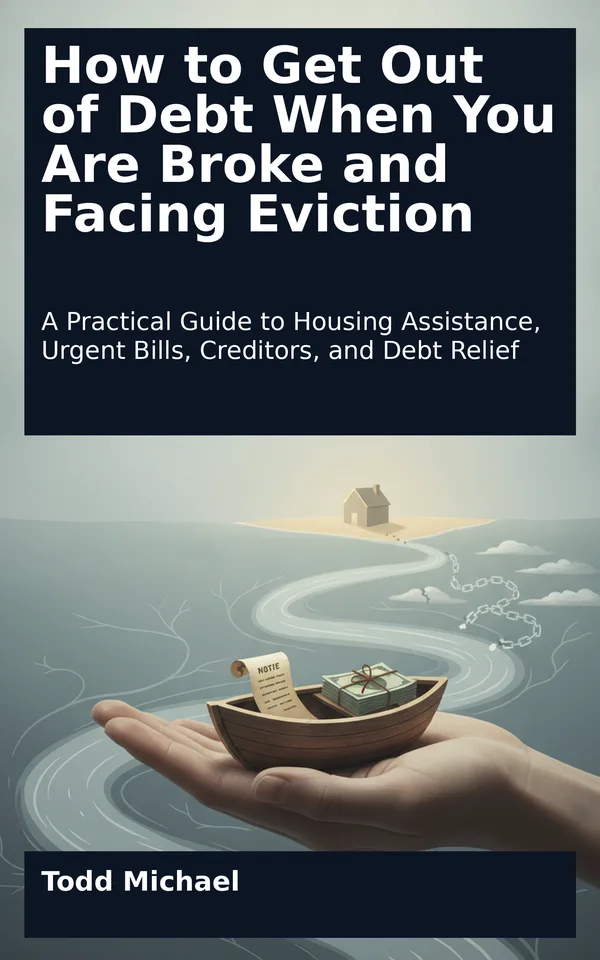
Cover of How to Get Out of Debt When You Are Broke and Facing Eviction

Money, Investing & Precious Metals

How to Get Out of Debt When You Are Broke and Facing Eviction

A Practical Guide to Housing Assistance, Urgent Bills, Creditors, and Debt Relief

by Todd Michael

Available now

When rent is overdue and creditors keep calling, it can be hard to know what deserves your attention first. If you are searching for how to get out of debt when you are broke, this guide starts with an urgent priority: protecting your housing while you assess your options.

Learn how to read an eviction notice, identify deadlines, locate local rental assistance and legal help, and prepare for conversations with your landlord. Build a bare-bones bill plan that accounts for rent, utilities, food, transportation, and other necessities before unsecured debt. You will also find practical scripts for contacting creditors, tools for tracking applications and agreements, and a clear introduction to debt management, settlement, and bankruptcy considerations.

Housing rules and assistance programs vary by location, and no outcome is guaranteed. This book helps you organize the next steps, ask better questions, and seek qualified local help when time matters.

Contents
  1. 1. Start with the Next Decision
  2. Begin with safety and time-sensitive papers
  3. Make a crisis snapshot
  4. Put dates beside demands
  5. Decide what the next dollars must do
  6. Make the first contacts
  7. What can wait until the immediate picture is clearer
  8. Your first-day checklist
  9. 2. Read the Notice Without Guessing
  10. 3. Find Housing and Legal Help
  11. 4. Talk with Your Landlord
  12. Prepare Before You Reach Out
  13. Start With a Clear Request
  14. Ask for an Accounting You Can Check
  15. Explain Assistance Without Promising It
  16. Decide What You Can Actually Offer
  17. Make a Specific Proposal
  18. Document the Conversation
  19. Review Before You Sign or Pay
  20. If There Is No Agreement
  21. 5. Prepare for the Eviction Process
  22. 6. Build a Housing-First Survival Budget
  23. 7. Stabilize Essential Bills
  24. 8. Find Money Without Creating a New Crisis
  25. 9. Map Your Debts and Their Consequences
  26. 10. Ask Creditors for Hardship Options
  27. 11. Handle Collections and Protect Your Information
  28. 12. Compare Debt Relief Paths
  29. Start With What You Can Actually Afford
  30. Credit Counseling: A Place to Review Options
  31. Debt Management Plans: Repayment Through a Counseling Agency
  32. Debt Settlement: Negotiating for Less Than the Balance
  33. Bankruptcy: A Legal Process, Not a Quick Purchase
  34. Questions to Take Into a Consultation
  35. Compare the Path, Not Just the Payment
  36. 13. Plan for More Than One Housing Outcome
  37. 14. From Crisis Triage to a Sustainable Plan
  38. Other Books by Todd Michael

Read a sample: Begin with safety and time-sensitive papers

Before you add up debts, take a moment to identify anything that cannot safely be postponed.

If someone in your household needs urgent medical attention or is in immediate danger, seek emergency help. If you have nowhere safe to sleep tonight, contact local shelter or crisis services as soon as you can. In many U.S. communities, calling 211 can connect people with information about housing, food, and other assistance, though services and availability vary. You can also contact a local housing agency, community organization, or social service office.

Next, look for papers or messages concerning your housing. These might include a notice from your landlord, a letter from a property manager, or papers from a court. Put them where you can find them, even if you cannot face every word yet. If a hearing, required response, lockout, utility disconnection, or loss of temporary housing may be imminent, seek qualified local help promptly.

A notice from a landlord is not automatically a court order. On the other hand, setting it aside will not make a deadline disappear. The wording, delivery method, required steps, and available protections vary by location. Chapter 2 will help you read a notice more carefully; for now, identify the document, any dates on it, and where to get help understanding it.

If you have court papers, pay particular attention to instructions about responding or appearing. Contact a local legal aid organization or qualified attorney as soon as possible, and verify hearing information through the court using contact details you find independently. Do not assume that a conversation with your landlord, an assistance application, or a promise to review your account changes a court date.

More Money, Investing & Precious Metals

Cover of The Practical Gold BookThe Practical Gold BookAvailable nowCover of The Practical Gold Book, Volume 2The Practical Gold Book, Volume 2Available nowCover of The Practical Silver BookThe Practical Silver BookAvailable nowCover of The Practical Crypto BookThe Practical Crypto BookAvailable nowCover of Shielding Your WealthShielding Your WealthAvailable nowCover of Personal Finance AdvancedPersonal Finance AdvancedAvailable now

About Todd Michael

Todd Michael is an American author and the founder of ToddMichael.tv. He writes practical, plain-English books on money, health, preparedness, technology, games, humor and more.

About the author Todd Michael · Todd Michael’s author site

Part of the ToddMichael.tv network.





