Read a sample: 1. When Familiar Days Change
For years, the walk happened without much planning. You parked a little farther from work, took the stairs to your office, and stopped at a nearby shop on the way home. Lunch came at roughly the same time because a colleague knocked on your door. By evening, you were ready for a familiar meal and, eventually, bed.
Then your schedule changed. Perhaps you retired, moved, began caring for someone, or found yourself living in a quieter—or busier—house. The walk did not so much end as lose its place. Lunch became something you noticed you had missed at three in the afternoon. The colleague who used to knock now sends an occasional message. Nothing about you has suddenly made a healthy routine impossible, but the ordinary events that helped hold it together are no longer there.
A transition can change how a day feels before you have words for what is different. Some changes bring relief or opportunity. Some arrive with grief, uncertainty, or responsibility. Many bring a mixture. Even a welcome change can require more adjustment than expected.
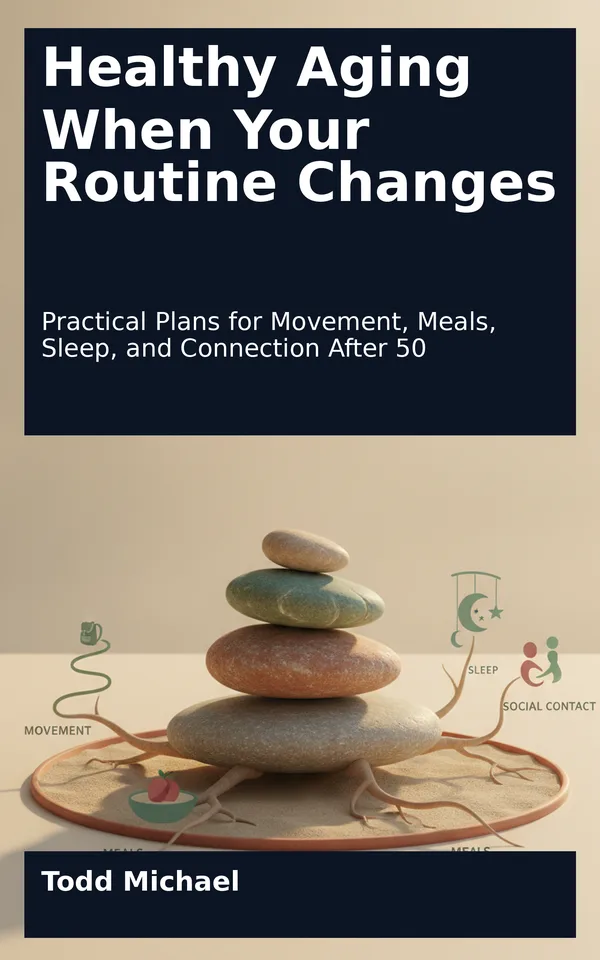
This book is about building practical support for your well-being in the days you have now. It focuses on four foundations: movement, meals, sleep, and social contact. These are not tests of discipline, and they do not have to look the same for everyone. They are areas of daily life worth paying attention to because a disruption in one can make the others harder to manage.
If you are caring for a family member at night, for example, a morning walk may need to give way to rest. If you have moved away from friends, eating alone may feel less appealing. If a new work schedule shifts your sleeping hours, the exercise class that once suited you may no longer fit. The answer is not to demand that life return to its old shape. It is to notice what has changed and find a workable next step.
Routines are often supported by more than conscious choices. They have cues: the events, places, people, and sensations that remind us what usually comes next.
A commute may have provided a reason to get dressed and leave the house. A weekly grocery trip may have happened after an appointment. A neighbor may have been the reason you took a walk, while the walk gave you a chance to catch up. A regular bedtime might have followed the simple realization that the next morning’s alarm was approaching.
Commitments matter, too. A class, a shift at work, a standing phone call, or a shared meal creates a place in the week for something that might otherwise be postponed. These commitments can be helpful even when we do not think of them as health practices.
When a transition removes a cue or commitment, the activity it supported may disappear with it. You may still value movement, good food, rest, and companionship. You may simply have lost the arrangement that made them easier to include.
This distinction matters. “I can’t seem to keep a routine” can sound like a judgment about your character. “My old walking time depended on my commute” gives you information you can use. It points toward a practical question: What could provide a new cue, and what kind of movement would fit there?
The new cue does not have to resemble the old one. You might stretch after the kettle boils, walk while a meal cooks, or meet someone at a time that suits both of you. You might discover that your best opportunity varies from day to day. A routine can have a recognizable shape without being rigid.
The four foundations often influence one another, but they do not need equal attention every day.
Movement may have been built into errands, work, or household life. A move can place familiar destinations farther away. An injury, health condition, or caregiving responsibility can change what feels comfortable or possible. Movement might now mean a short walk, gentle activity at home, a class, or another option suited to your circumstances.
Meals can become complicated when the number of people at the table changes, money is tight, or shopping and cooking time is unpredictable. Someone who once enjoyed preparing dinner for a family may need to learn what works for one. Someone sharing a home may be negotiating different schedules and food preferences.
Sleep can be affected by a different work pattern, an unfamiliar bedroom, worry, pain, or another person’s needs. You may have less control over when you can rest than a tidy schedule suggests. Even so, noticing what is interrupting sleep can help you protect the opportunities you do have and decide when to seek advice.
Social contact may change in quieter ways. Retirement can remove dozens of small conversations from a week. Relocation can make familiar friendships harder to maintain in person. Caregiving can make leaving home difficult, even when other people are nearby. Connection may need to be planned more deliberately than it once was.
These foundations are connected, but you do not have to fix them all at once. In fact, trying to change everything during an already demanding transition can create another burden. A useful starting point is the area where a small adjustment would either meet an immediate need or make the rest of the day a little easier.
Throughout this book, you will meet adults facing different kinds of change.…