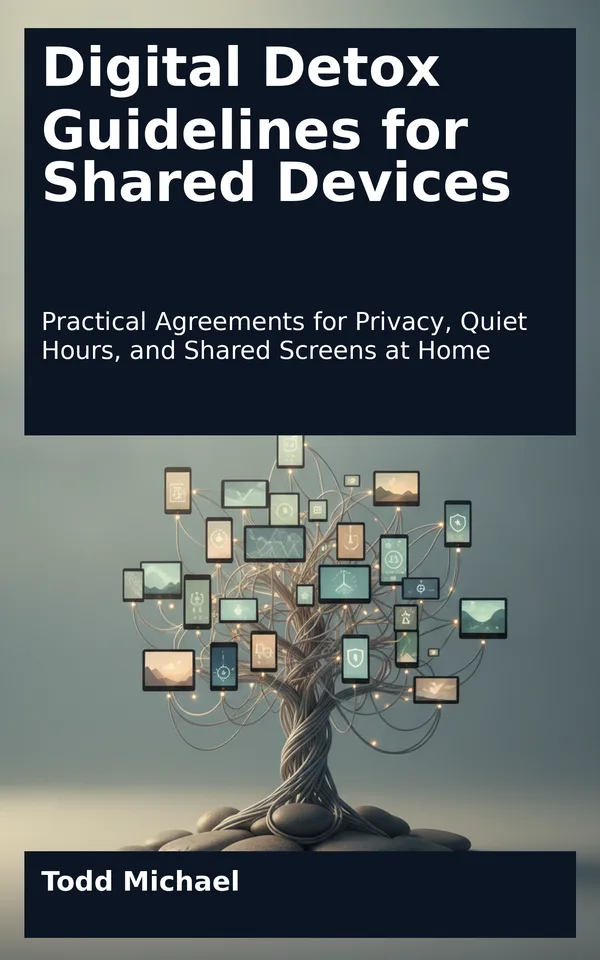
Digital Detox Guidelines for Shared Devices
Practical Agreements for Privacy, Quiet Hours, and Shared Screens at Home
by Todd Michael
Available nowWhen a television fills the living room, a shared tablet reveals private messages, or a late-night video wakes a housemate, the problem isn't always the screen. Often, it's that nobody has agreed on how to share it.
Digital Detox Guidelines for Shared Devices helps households turn recurring frustrations into clear, flexible agreements. You'll learn how to choose locations for shared screens, set boundaries around accounts and personal information, establish quiet hours, and make room for work, study, entertainment, and accessibility needs.
Conversation prompts, sample agreements, and practical scenarios help you navigate disagreements without blame. A step-by-step review process makes it easier to adjust when schedules change or a rule stops working.
Whether you live with family, roommates, or several generations under one roof, this guide offers a realistic path toward a calmer shared home—without demanding that everyone give up technology.
Contents
- 1. Why Shared Screens Create Friction
- The Device Is Rarely the Whole Story
- Ordinary Moments, Real Effects
- What Is Actually Shared?
- From Rules Imposed to Agreements Built
- Begin with Curiosity, Not a Case Against Someone
- A Household Screen-Friction Inventory
- Fairness Is More Than Equal Time
- Choose One Conversation to Begin
- 2. Map the Devices and the People Who Use Them
- 3. Start a Conversation Without Starting a Fight
- 4. Decide Where Screens Belong
- 5. Make Privacy a Shared Responsibility
- 6. Create Quiet Hours That Work
- 7. Share Time Without Keeping Score
- 8. Balance Work, Learning, Care, and Play
- 9. Include Different Ages, Abilities, and Roles
- Participation Is More Than Being Present
- Notice Who Carries the Decision
- Give Children a Voice Within Adult Responsibilities
- Ask Older Adults, Rather Than Assuming
- Treat Accessibility as Part of the Agreement
- Recognize the Work of Care
- A Household Example: One Screen, Several Kinds of Access
- Try an Inclusion Check Before You Write
- 10. Write an Agreement People Can Use
- Our Shared-Device Agreement
- 11. Handle Exceptions and Everyday Slips
- 12. When Needs Clash
- 13. Review, Revise, and Try Again
- 14. Your Household Agreement Toolkit
- A Complete Sample Agreement
- Template: A Short Household Meeting
- Template: Privacy on Shared Devices
- Template: Quiet Hours That People Can Follow
- Template: Exceptions and Everyday Repair
- Template: The Review Conversation
- Adapt the Toolkit to Your Household
- Choose Your Next Step
- Other Books by Todd Michael





