Money, Investing & Precious Metals
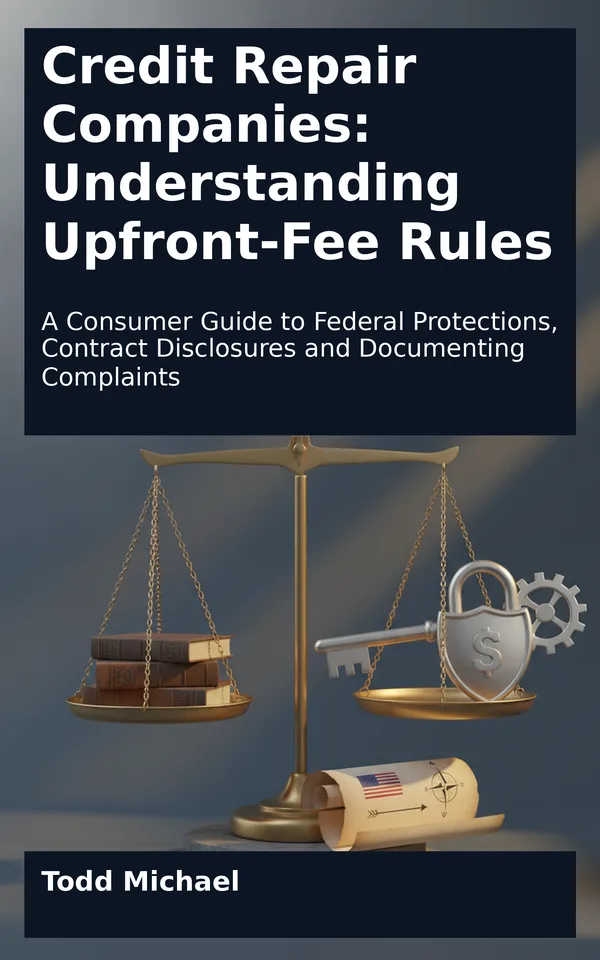
Credit Repair Companies: Understanding Upfront-Fee Rules
A Consumer Guide to Federal Protections, Contract Disclosures and Documenting Complaints
by Todd Michael
Available nowBefore you pay a company to help with your credit, understand the rules that may protect you.
Credit repair companies often advertise quick fixes, but their promises, contracts, and payment requests deserve a closer look. This plain-English guide explains federal restrictions on advance fees for credit repair services, the disclosures and contract terms consumers should expect, and the records that can help when a dispute arises.
Learn how to review a service agreement, recognize claims that warrant further questions, organize payment and communication records, and prepare a clear complaint for the appropriate agency. You'll also discover why state protections may differ and where to find current federal and state guidance.
With practical checklists, example scenarios, and complaint-documentation tools, this book helps you approach a consequential financial decision with greater confidence—without promising a particular credit score or legal outcome.
Contents
- 1. What Credit Repair Companies Offer
- What Credit Repair Usually Means
- Who Can Dispute an Error?
- Services That Are Different From Credit Repair
- How Credit Repair Offers Are Commonly Structured
- Understanding Claims Without Treating Them as Results
- The Cost of Convenience
- Your Introductory Decision Worksheet
- A Clearer Starting Point
- 2. The Federal Consumer Protection Framework
- 3. When Can a Company Charge You?
- 4. Telemarketing and Other Important Boundaries
- 5. Disclosures Before You Sign
- 6. Reading the Credit Repair Contract
- What the Federal Contract Must Contain
- Start With the Company’s Identity
- Follow the Money
- Identify the Actual Work
- Check the Time for Performance
- Examine Guarantees and Their Limits
- Read the Agreement as a Whole
- A Practical Contract-Review Checklist
- If the Terms Do Not Add Up
- 7. Cancellation Rights and Practical Steps
- 8. Promises, Disputes, and Warning Signs
- 9. Comparing Services Before You Commit
- 10. Why State Protections Differ
- 11. Building Your Evidence File
- Start With What You Already Have
- Preserve the Offer You Saw
- Keep the Agreement and Its Surrounding Documents Together
- Follow the Money Without Guessing
- Build a Timeline That Another Person Can Follow
- Separate Facts, Recollections, and Conclusions
- Identify Gaps and Ask Focused Questions
- Protect Sensitive Information While Preserving Evidence
- Prepare a Working Set for the Next Step
- 12. Preparing and Submitting a Complaint
- 13. After the Complaint
- 14. Current Guidance and Your Next-Step Toolkit