Read a sample: 1. One Base, Two Happy Plates
Dinner does not have to be a choice between making everyone eat the same thing and making two entirely separate meals. A pot of rice can become a lemony chicken bowl for one person and a chickpea bowl with a little chile for the other. The shared rice, vegetables, and sauce make the meal feel like one dinner; the finishing choices make each plate feel like the right dinner.
That is the idea behind this book. Each recipe begins with a shared base: the part of the meal both people can enjoy. From there, you choose a protein and a finish for each plate. One person can have meat and a mild sauce while the other has a meatless protein and a spicy sauce. You can also both choose meat, both choose meatless proteins, both stay mild, or both reach for the heat.
There is no preferred combination. Appetite, habit, dietary needs, and tolerance for spice may differ from one diner to the next—and from one evening to the next. The goal is a satisfying meal for both people, with enough flexibility to make cooking together easier rather than more complicated.
Think of each dinner as three parts:
1. The base is prepared for two. It might be rice and vegetables, pasta with a tomato sauce, roasted potatoes, a pot of soup, or a tray of vegetables.
2. The protein is chosen for each person. Depending on the recipe, that may mean chicken, another meat, beans, tofu, or a different meatless option.
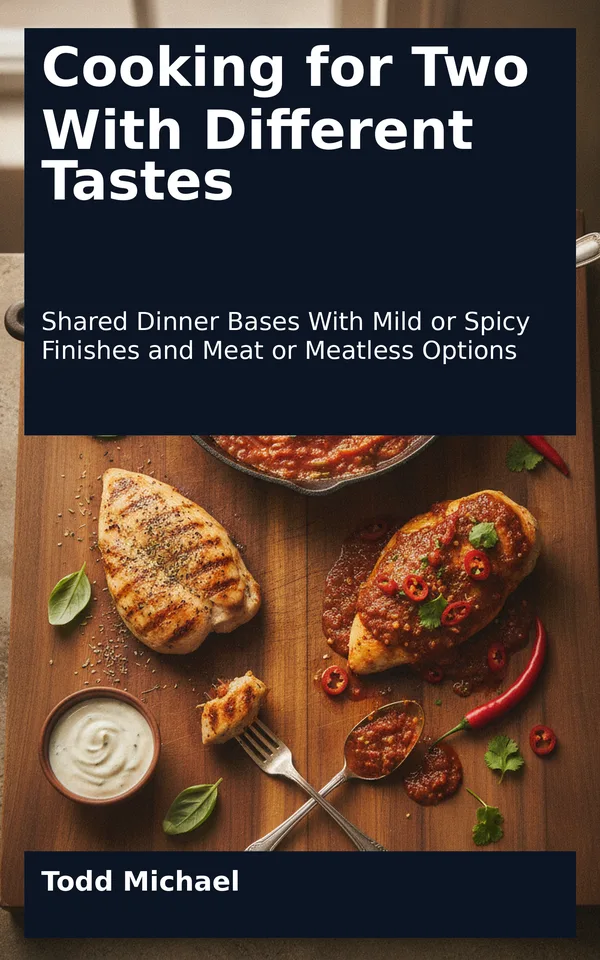
3. The finish gives each plate its final character. A mild finish might be a lemony yogurt sauce; its spicy partner might begin with that same sauce and add chile.
The base does not need to be plain. Herbs, citrus, garlic, and gently cooked aromatics can give it plenty of flavor without deciding the heat level for both diners. The key is to save ingredients that divide the table—especially meat and hot chiles—until they can be added separately.
Some meals branch at the stove. Others stay together until you spoon the base into bowls. Either way, you are not cooking two complete dinners. You are making one foundation and giving it two thoughtful endings.
A shared base is only truly shared if it suits both diners. If one person is avoiding meat, make the rice with vegetable broth or water rather than chicken broth, and check sauces and other prepared ingredients for meat-derived additions. If dairy is not welcome on one plate, choose a suitable alternative before mixing a sauce for both. These small decisions are easiest to make at the beginning, not after everything is in the pan.
Before you start cooking, look through the whole recipe and make four decisions: which protein each person wants, which finish each person wants, what equipment you will use, and when the base needs to be divided.
The recipes are written to serve two. The shared-base ingredients make enough for both plates. Protein choices are portioned so that you can select what each diner needs; follow the stated quantity for the combination you are making. If both people choose the same protein, prepare enough for two rather than assuming a one-person option will stretch. Likewise, if both want the same finish, use the recipe’s guidance for making two portions of it.
Pay attention to the point where an ingredient list branches. A chicken option and a chickpea option are alternatives for a plate, not necessarily ingredients that both belong on every plate. The same is true of the mild and spicy finishes. Read their quantities alongside the serving directions so you know whether a sauce is made as one batch and divided or mixed separately for each diner.
Heat and protein are independent choices. A meatless plate does not have to be spicy, and a meat plate does not have to be mild. You might plan the following combinations:
- Chicken with a mild finish and chickpeas with a spicy finish.
- Chicken with a spicy finish and chickpeas with a mild finish.
- Two meatless plates, with different finishes.
- Two plates with the same protein and the same finish.
The possibilities are useful, but you do not need to deliberate over every dinner. Once you know what each person likes, make those choices part of your quick read-through.
The easiest moment to divide a meal depends on what you are cooking. For a grain bowl, spoon the rice and vegetables into two bowls, then add the proteins and sauces. For pasta, divide the noodles before stirring a spicy condiment into one portion. For soup, ladle the shared broth and vegetables into bowls before adding separately prepared proteins.
If the portions do not need to be exactly equal, there is no need to measure every spoonful. Give the hungrier person a little more rice, or offer extra vegetables to the person who wants them. When you are dividing a small batch of sauce or a specifically portioned protein, however, a measuring spoon or a quick visual check can help ensure both plates get what was planned.
Keep the mild portion genuinely mild by setting it aside before adding chile. A few drops of hot sauce left in a mixing bowl can change the next spoonful, so use a clean spoon for the mild finish. Spicy diners can always add more heat at the table; taking it back out is…