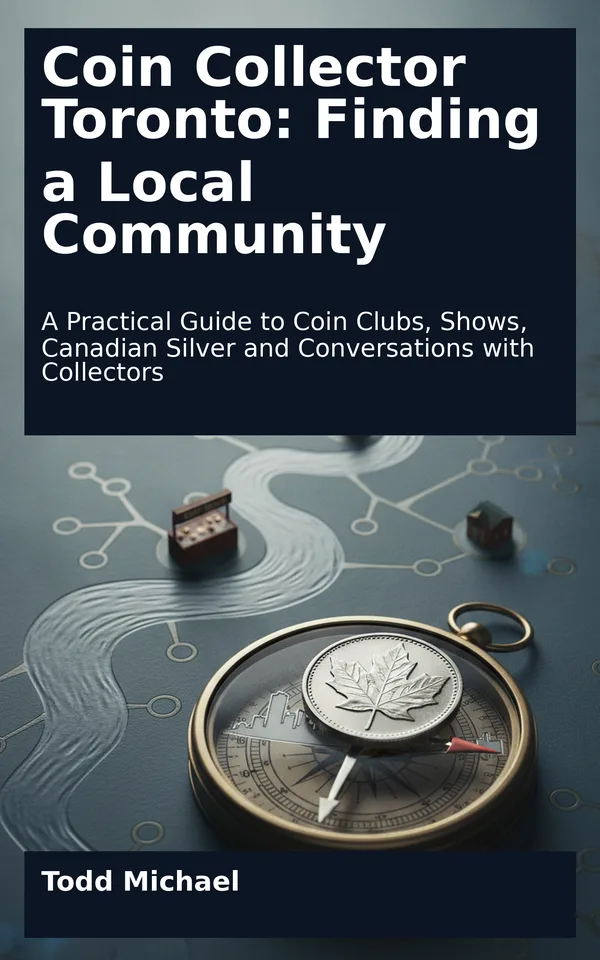
Read a sample: 1. Finding Your Place in Coin Collecting
A coin can arrive in your life with a story already attached. Perhaps it came from a relative’s drawer, turned up among travel keepsakes, or caught your eye because its design looked different from the change you usually handle. You may know its denomination and date but little else. You may not even be certain which side holds the clue you need.
That uncertainty is a useful place to begin. Coin collecting offers many ways to follow a question: into Canadian history, design, precious metals, family memories, or conversations with people who notice details you have not yet learned to see. In Toronto and the surrounding area, the possibilities can feel especially broad. There are organized meetings, public events, businesses, libraries, and online spaces, each offering a different kind of experience.
Before choosing where to go, take a moment to decide what you want from the hobby. A little preparation will help you recognize an activity that suits your interests, schedule, and budget. It will also make your first conversations easier: instead of trying to sound knowledgeable, you can explain what caught your attention and what you would like to learn.
You do not need to buy a coin or prove your expertise to belong in a collecting conversation. Curiosity is a sound starting point.
People collect for different reasons, and those reasons often overlap. Someone interested in Canadian silver may also enjoy historical portraits, the changing appearance of ordinary money, or the challenge of researching a coin inherited from a parent. You do not have to settle on a single identity as a collector. It is enough to notice which questions make you want to look more closely.
Consider the following starting points.
History and everyday life. Coins are small objects that passed through shops, pockets, tills, and households. Their dates and designs can prompt questions about the periods in which they circulated. You might be drawn to coins from a particular decade, to changes in Canadian imagery, or to the ordinary money that would have been familiar to an earlier generation.
Design and craftsmanship. A portrait, animal, ship, leaf, or commemorative image may appeal to you before you know anything about the coin’s background. Collectors interested in design often enjoy comparing details: lettering, placement, wear, and the way an image changes from one issue to another.
Canadian silver. Some collectors want to understand which Canadian coins contain silver and how those coins differ from later circulating money. This interest can lead to questions about composition, weight, condition, and the relationship between metal value and collector demand. Appearance alone is not enough to establish silver content; the issue and its specifications matter. Later chapters will provide a foundation for investigating those details.
Family and personal connections. A small group of coins can preserve a connection to a person or place. The story may be more important to you than the coins’ market value. Recording what you know now—who owned them, where they were kept, and what you remember being told—can be part of your collecting practice.
Research and classification. Some people enjoy organizing information as much as acquiring objects. They may keep lists, compare references, or investigate why two similar-looking coins differ. A collection can become a series of manageable research projects.
Precious metals and financial interest. You may be curious about silver as a tangible asset as well as a collectible. That is a reasonable interest, but a coin’s metal content is only one part of its financial picture. Purchase premiums, selling costs, condition, authenticity, and the availability of a buyer can affect the outcome. Prices can change, and a collectible premium paid today may not be recovered later. This book offers educational tools, not individualized financial advice or a promise of return.
You may recognize yourself in several of these descriptions, or in none of them. Perhaps you simply enjoy finding an unfamiliar coin and figuring out what it is. That interest is specific enough to guide a first visit to a club or show.
A common way to narrow a broad interest is to turn it into a question. “I like old coins” is a beginning; “How can I tell whether this Canadian coin was made for circulation?” gives you something concrete to investigate. A good question need not lead immediately to a purchase. It can lead to a catalogue, a library visit, a club presentation, or a conversation across a table.
Try shaping your curiosity into a question that can be explored in a short session:
- What features should I record when identifying an unfamiliar Canadian coin?
- Which Canadian circulating denominations were issued in silver, and how do I check a particular date?
- How does wear affect the appearance of a coin’s design?
- What can a local collector tell me about the references they use?
- How do collectors distinguish a coin’s approximate silver content from its appeal as a collectible?
Each question points toward a different kind of help. A reference may answer a specification question. A knowledgeable person may be able to show you what a worn detail looks like on an actual coin. A club presentation might introduce a subject you did not know existed.
Keep a short list rather than trying to solve everything at once. If a question becomes too large, divide it. “Are Canadian silver coins valuable?” contains several smaller questions: Is this issue silver?…