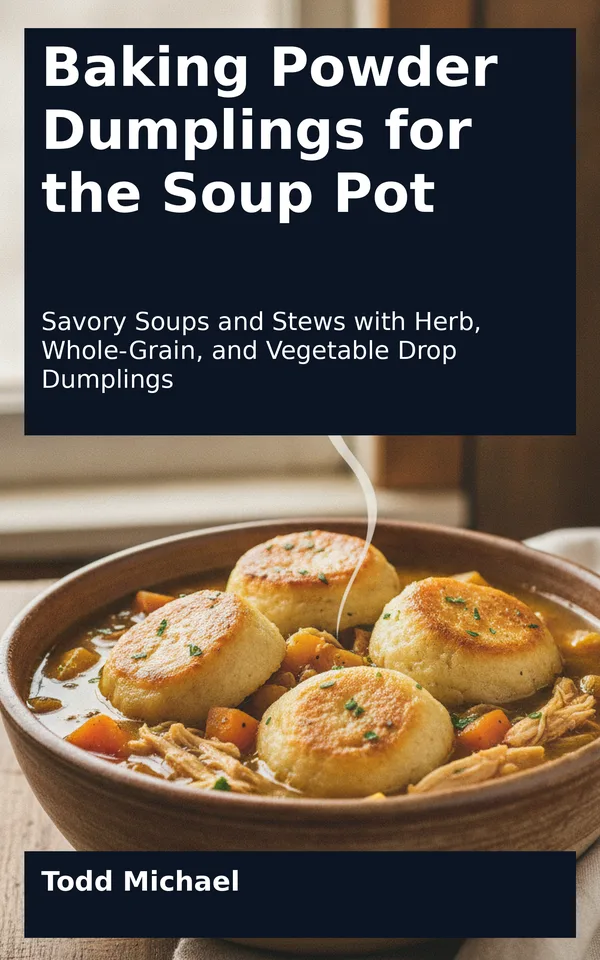
Read a sample: 1. The Soup-Pot Dumpling
A pot of soup becomes a different kind of supper when dumplings cook on top. The broth is still there, along with its vegetables, beans, or tender pieces of meat, but now each bowl has something soft and substantial to break into with a spoon. The dumplings belong to the soup rather than simply sitting beside it: Their lower edges take on some of the broth’s flavor, while their centers are intended to stay tender and breadlike.
That is the pleasure at the heart of this book. A simple baking powder dough is dropped by spoonfuls onto a savory soup or stew and cooked in the same pot. There is no need to roll out pastry, shape individual parcels, or bring a separate pan of water to a boil. The method is homely in the best sense, but it is also adaptable. A parsley-flecked dumpling can brighten chicken broth; cornmeal can lend a pleasing graininess to a hearty pot; a little prepared vegetable can add color and flavor to the dough itself.
If you have never made dumplings, start by thinking of them as small, soft quick breads cooked with moist heat rather than in an oven. They are approachable, but they are not quite the same as biscuits baked on a tray. The soup underneath them, the size of each spoonful, and the way heat moves through the covered pot all influence the result. A good recipe takes those things into account. Your job is to notice what is happening and give the dumplings the time and space they need.
This opening chapter introduces the equipment, ingredients, and recipe cues you will encounter throughout the book. Chapter 2 brings those elements together in a basic dough and a complete soup. Chapter 3 looks more closely at the cooking process, including how to check the centers and what to do when a batch needs more time.
The word dumpling describes a wide and wonderful range of foods. Some dumplings are rolled thin, cut into strips, and simmered in broth. Others are wrappers folded around a filling. Still others are shaped from potatoes, grains, or bread. Each has its own method and character.
The dumplings here begin with a soft dough made with baking powder. Instead of being kneaded and rolled, the dough is portioned with a spoon and dropped onto the surface of a simmering soup or stew. The pieces cook above and partly in the liquid, generally with the pot covered as directed in the recipe.
Baking powder provides lift as the dumplings cook. Flour gives them structure; liquid brings the ingredients together; and a modest amount of fat, when included, contributes richness. Seasonings may be as simple as salt and pepper or as distinctive as dill, chives, rye, or cooked squash.
A drop dumpling will not look perfectly uniform. Its edges may be craggy, its top gently rounded, and its underside colored by the soup. That irregular shape is part of its appeal. The aim is not a row of identical spheres but dumplings that are cooked through and pleasant to eat with the broth beneath them.
They also differ from dumplings prepared separately and added at serving time. Because these cook directly in the pot, the soup and dough share heat, moisture, and flavor. A thick stew and a thin broth behave differently, so the recipes are designed with the pairing in mind. There should be enough liquid to support cooking, even when the finished dish is hearty enough to eat with a fork as well as a spoon.
A successful pairing considers more than flavor. It also considers weight, texture, and timing.
A clear, lemony chicken broth has room for a lightly seasoned dumpling that will not overwhelm it. A robust beef stew can stand up to a more substantial grain flavor. Mushrooms welcome savory herbs and a creamy broth; beans make a satisfying foundation for dumplings with a little pantry seasoning. None of these combinations is a rigid rule. They are starting points for choosing ingredients that make sense together.
The soup must also be ready to receive the dough. By the time the dumplings go in, the main ingredients should be close to their intended tenderness. A spoonful of soft dough is not a substitute for the longer cooking that a tough cut of meat or a firm vegetable may need. Think of the dumplings as the final stage of the pot, not the beginning.
You will find both brothy soups and thicker stews in these pages. A dumpling does not need to disappear beneath the liquid, but it does need an environment in which it can cook. A pot packed tightly with solids, or reduced until little liquid remains, may need adjustment before the dough is added. Creamy and thickened pots call for particular attention because they can catch on the bottom more readily than thin broths. The individual recipes will guide you.
The intended contrast is appealing: savory liquid and tender ingredients below, soft dumplings above. Actual texture varies with the dough, the pot, and the cooking conditions. Whole grains may give a dumpling a heartier bite, while vegetables folded into the dough can change its moisture and density. These differences are not flaws; they are reasons to enjoy more than one kind.
You do not need specialized dumpling equipment. A few dependable kitchen tools will carry you through the book.
A…