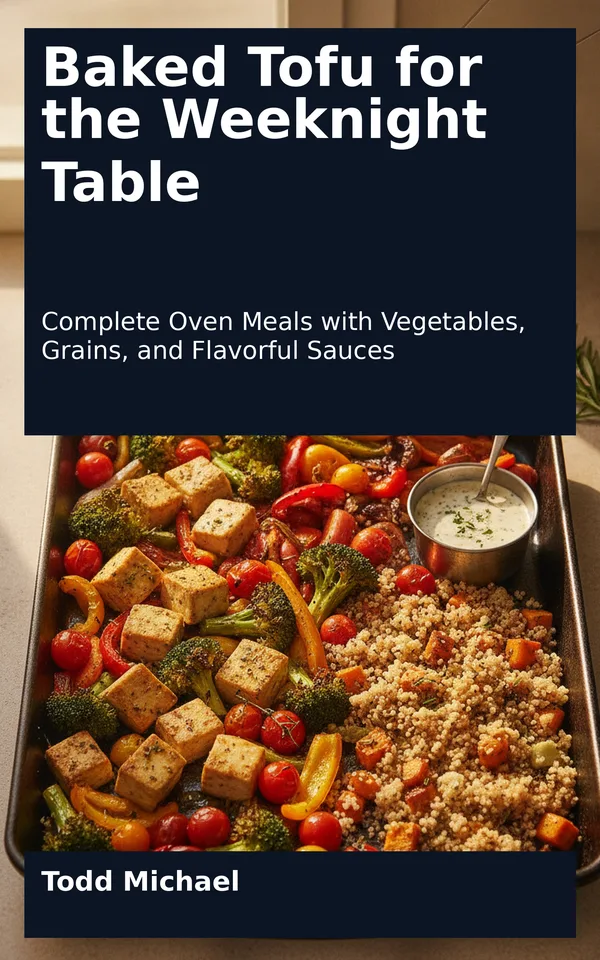
Read a sample: 1. A Better Tofu Dinner Starts Here
A good weeknight dinner does not need to demand every burner, bowl, and minute of your attention. Sometimes it needs a hot oven, a dependable pan, and a few ingredients that know how to work together. Tofu brings substance to the meal, vegetables add color and variety, a grain makes the plate generous, and a sauce gives everything a reason to belong together.
That is the approach behind this book. These are complete dinners built around baked tofu, not tofu recipes that leave you wondering what else to serve. Some meals spread across a sheet pan and a baking dish; others come together in a covered casserole. A sauce might be stirred together while the oven works, or it might be part of the bake itself. In each case, the aim is the same: a satisfying plant-based dinner with a manageable rhythm.
If tofu is new to you, there is no need to master every technique before you begin. Start with a recipe that appeals to you, buy the type of tofu it specifies, and follow the visual cues as well as the suggested times. If tofu is already familiar, you will find plenty of room to make the meals your own with different vegetables, seasonings, and sauces.
The oven simplifies dinner, but it does not make cooking entirely hands-off. You will still need to check the food, turn or add ingredients when directed, and stay attentive while the oven is on. Think of the oven as a helpful partner: it takes over much of the steady cooking so you can focus on the few moments that need you.
A useful way to read any recipe in this book is to notice its four parts.
Tofu is the main protein and can be crisp-edged, tender, saucy, or deeply seasoned. Its texture depends on the type you buy and how the recipe prepares it.
Vegetables contribute sweetness, freshness, and contrast. Roasting can brown their edges and concentrate their flavor, while a covered bake gives them a softer, more comforting character.
Grains make the dinner substantial. Depending on the recipe, they may cook in a covered dish alongside the tofu and vegetables, arrive at the table already cooked, or be warmed as part of the final assembly.
Sauce or seasoning connects the components. It may be a spoonable dressing, a glaze, a seasoned cooking liquid, or simply a well-balanced combination of pantry ingredients.
These parts do not have to be kept separate on the plate. A rice bake can contain the tofu, vegetables, grain, and seasoning in one dish. A tray dinner might need a separate bowl of sauce and a pan of grains. What matters is that the recipe gives you a plan for the whole meal.
This structure is also useful when you are choosing dinner. If you have tofu and a head of broccoli but no rice, look for a recipe that uses another grain you have. If your refrigerator contains cooked grains, choose a tray meal and warm the grains as directed or until thoroughly hot. If you want a softer, spoonable dinner, turn toward a covered bake rather than trying to make a crisp tray recipe behave like a casserole.
Before picking a recipe, take stock of three things: the time you have, the ingredients that need using, and the amount of attention you can give the oven.
On a busy evening, look for a recipe with a short ingredient list and a straightforward sequence. A quick-roasting vegetable and a grain you already have cooked can make the work feel lighter. Read the full timing, however: a short preparation time does not necessarily mean a short time from start to finish. The oven may need to preheat, tofu may need preparation, and a covered grain dish may need to rest before serving.
When you have a little more time, a longer-baking casserole or a dinner with dense vegetables can be rewarding without requiring constant work. It is a good choice when you can remain nearby, check the oven as needed, and let the meal cook at its own pace.
Let the refrigerator guide you, too. Delicate vegetables and sturdy ones are not always interchangeable on the same schedule. Zucchini and peppers generally soften more quickly than thick pieces of carrot or winter squash. Rather than swapping freely and hoping for the best, choose a recipe that already suits the vegetables you have, or adjust their size and when they go into the oven. Chapter 3 offers more guidance on coordinating ingredients with different cooking needs.
Finally, consider the kind of dinner you want to eat. A bright sauce can make roasted vegetables and grains feel lively; a smoky or savory sauce can make the same basic components feel heartier. A covered bake is inviting when you want tenderness and warmth, while a tray meal offers more browned surfaces. There is no single best version of baked tofu—only the version that fits your table tonight.
You do not need a kitchen full of specialty tools. A few reliable pieces will carry you through most of the book.
A rimmed sheet pan gives tofu and vegetables room to roast and keeps juices and oil from running off the edge. A sturdy pan is useful because it is easier to move safely when loaded. If a recipe calls for two pans, dividing the food between them gives it the space…