Money, Investing & Precious Metals
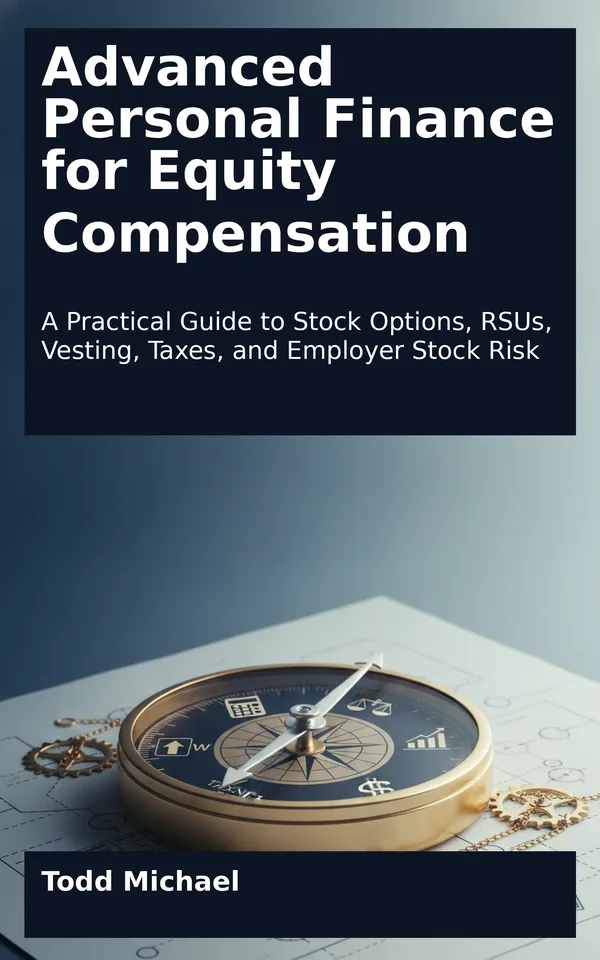
Advanced Personal Finance for Equity Compensation
A Practical Guide to Stock Options, RSUs, Vesting, Taxes, and Employer Stock Risk
by Todd Michael
Available nowYour equity award may be one of the most valuable—and least understood—parts of your compensation. Knowing the number of shares is only the beginning: vesting dates, exercise deadlines, tax events, and the risk of holding your employer’s stock can all affect your decisions.
Advanced Personal Finance for Equity Compensation explains the mechanics of stock options, restricted stock units, restricted stock, and employee stock purchase plans through practical examples. Learn how to read award documents, map important dates, distinguish withholding from your eventual tax liability, and assess how employer shares fit into your broader finances.
Designed for readers searching for personal finance advanced guidance, this book also offers checklists and questions to bring to a qualified tax professional before exercising, selling, or making other consequential choices. Understand what you own, what you need to verify, and where to get help.
Contents
- 1. Equity Compensation in Your Financial Life
- Compensation, Ownership, and Cash Are Different Things
- A Brief Map of Common Awards
- The Value You See Is Not Necessarily the Value You Keep
- Plan Your Household Finances Around Availability
- Your Paycheck and Your Portfolio May Share a Risk
- The Emotional Pull of Company Stock
- Build a Starting Inventory
- Turn the Inventory Into Better Questions
- 2. Reading the Documents That Govern Your Award
- 3. Vesting Schedules and the Calendar of Ownership
- Four Events, Not One
- Cliff Vesting: Nothing, Then a Portion
- Graded Vesting: A Series of Installments
- Performance Vesting: The Date Is Only Part of the Test
- Build a Calendar That Follows the Award
- What Happens When a Condition Is Missed?
- Leave Can Change the Clock
- Employment Changes and Departure
- Turn the Schedule Into Decisions
- 4. Restricted Stock Units and Restricted Stock
- 5. Stock Options: Rights, Costs, and Deadlines
- 6. Employee Stock Purchase Plans
- 7. The Tax Events Across an Award’s Life
- A timeline, not a single tax event
- RSUs: income first, then investment gain or loss
- Restricted stock and the election that changes timing
- Nonqualified options: exercise creates compensation
- Incentive stock options: two tax systems to consider
- ESPPs: the plan and the sale date both matter
- Holding periods and basis: keep the clocks separate
- Prepare the questions before the transaction
- 8. Withholding, Cash Flow, and Tax Surprises
- 9. The Cost and Risk of Exercising Options
- 10. Measuring Employer Stock Concentration
- 11. Building a Diversification Decision Framework
- 12. Trading Windows, Private Shares, and Life Changes
- 13. Records, Reporting, and Cost Basis
- 14. Your Equity Review and Professional Meeting
- Other Books by Todd Michael