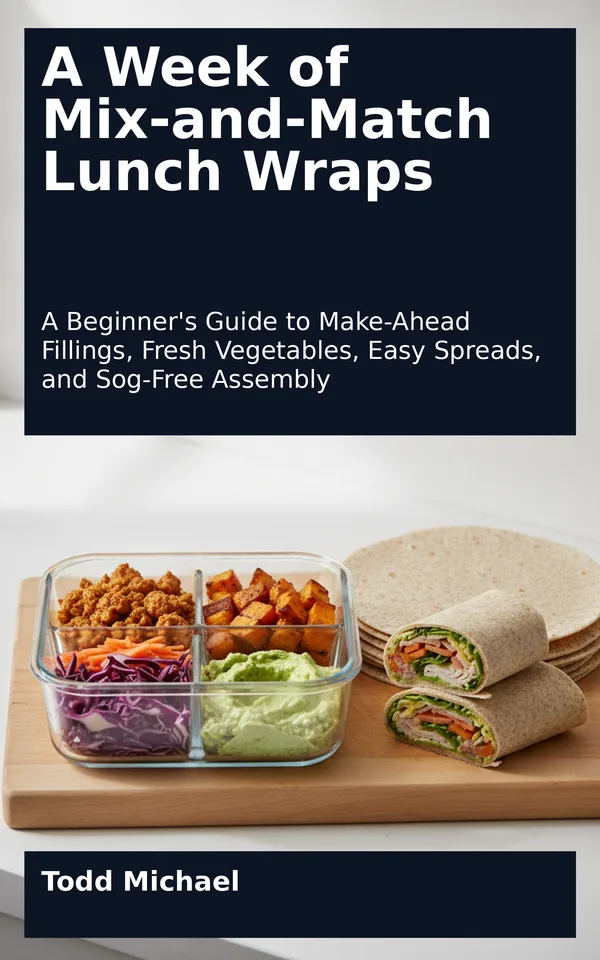
Read a sample: 1. The Mix-and-Match Wrap Method
A good lunch wrap solves a small daily problem: it gives you something satisfying to eat without asking you to make every decision from scratch at noon. It can also solve a larger problem. When the same container of filling appears in the refrigerator several days in a row, a change of vegetables or a different spread can make it feel like the beginning of a new lunch rather than a repeat of yesterday’s.
The method in this book starts with components, not five completely separate recipes. You prepare or buy a few things that work well together, then combine them in different ways throughout the week. One savory filling might meet crunchy cabbage and a tangy spread on Monday, then become a softer, milder wrap with spinach and hummus on Wednesday.
You do not need a refrigerator full of tiny containers or a perfect Sunday routine. You need a workable plan, a few ingredients you enjoy, and enough flexibility to change your mind.
Think of each lunch as a combination of four parts:
1. A tortilla or other wrap holds everything together.
2. A filling gives the wrap its main substance and flavor.
3. Vegetables add freshness, color, and texture.
4. A spread or sauce brings the components together.
For a first attempt with a large flour tortilla, try about ½ cup of filling, ½ to 1 cup of prepared vegetables, and 1 to 2 tablespoons of spread. These are starting points, not rules: a smaller tortilla will hold less, and a chunky filling may need more room than a soft one. If the wrap is difficult to close, remove a little filling rather than forcing it. Chapter 3 offers more help with tortilla sizes, rolling, and packing.
The four parts are useful because each has a job. Once you understand those jobs, substitutions become easier. Out of cabbage? Try another crisp vegetable. Not in the mood for a creamy spread? A thicker bean spread may provide the savory finish you want. Prefer a bowl today? Use the same components without the tortilla.
The filling is usually the component that takes the most planning, particularly if it needs to be cooked. It might be seasoned chicken, ground turkey or beef, beans, lentils, eggs, or tofu. Leftover cooked ingredients can also work, provided they have been handled and stored appropriately.
Choose a filling you would be happy to eat more than once. That sounds obvious, but it is more useful than choosing the most exciting recipe and hoping it will fit every lunch. A simply seasoned filling can move in several directions: lemon and herbs might taste bright with a yogurt spread, while the same chicken could become more savory beside hummus and crunchy vegetables.
You can also start with two fillings. A batch of chicken and a container of seasoned beans offer a useful contrast without requiring five separate cooking projects. If your week is especially busy, one homemade filling and one convenient option may be plenty. Canned beans, for example, can be drained and seasoned without turning on the stove.
Consider texture as well as flavor. Shredded chicken, crumbled tofu, and mashed beans settle into a wrap differently. A soft filling may benefit from crisp vegetables, while a chunkier filling might be easier to eat with tender greens and a smooth spread. Neither combination is mandatory; the point is to notice what would make each bite more enjoyable.
If a filling contains a lot of liquid, plan to drain or reduce it before assembly, or keep it separate until you are ready to eat. A flavorful sauce is welcome, but a puddle in the container can quickly become a problem for the tortilla.
Vegetables make a wrap feel fresh, but freshness does not have to mean a large salad stuffed inside a tortilla. A modest handful of well-prepared vegetables often does more than a bulky mixture that is difficult to roll.
Think about the texture each vegetable contributes:
- Crisp: shredded cabbage, carrots, bell peppers, or firm lettuce.
- Tender: baby spinach, soft lettuce, or cooked zucchini.
- Juicy: tomatoes and cucumbers.
- Savory and soft: roasted peppers, onions, or other cooked vegetables.
A mix of one crisp vegetable and one tender or juicy vegetable can be especially appealing. Shredded cabbage and cucumber give you two kinds of crunch; roasted peppers and spinach add softness and color. If you like a simpler wrap, one vegetable is enough.
Preparation matters. Vegetables cut into manageable pieces are easier to distribute and less likely to pull out in a single bite. Wash produce as appropriate, dry it well, and consider whether a juicy ingredient would be better added just before eating. Drained roasted vegetables can be delicious in wraps, too; they do not all have to be raw.
When choosing vegetables for the week, buy with more than one lunch in mind. A bag of carrots can become thin strips for one wrap and a grated topping for another. A head of cabbage can add crunch in several combinations without requiring you to prepare a different vegetable every day. Chapter 9 explores ways to wash, cut, roast, and organize vegetables for wraps.
A spread can make separate components taste like a complete lunch. Hummus adds a mellow, savory note. A thick yogurt-based spread can bring tang. Mashed avocado offers richness, while mustard can provide a sharper accent. A sauce made with…